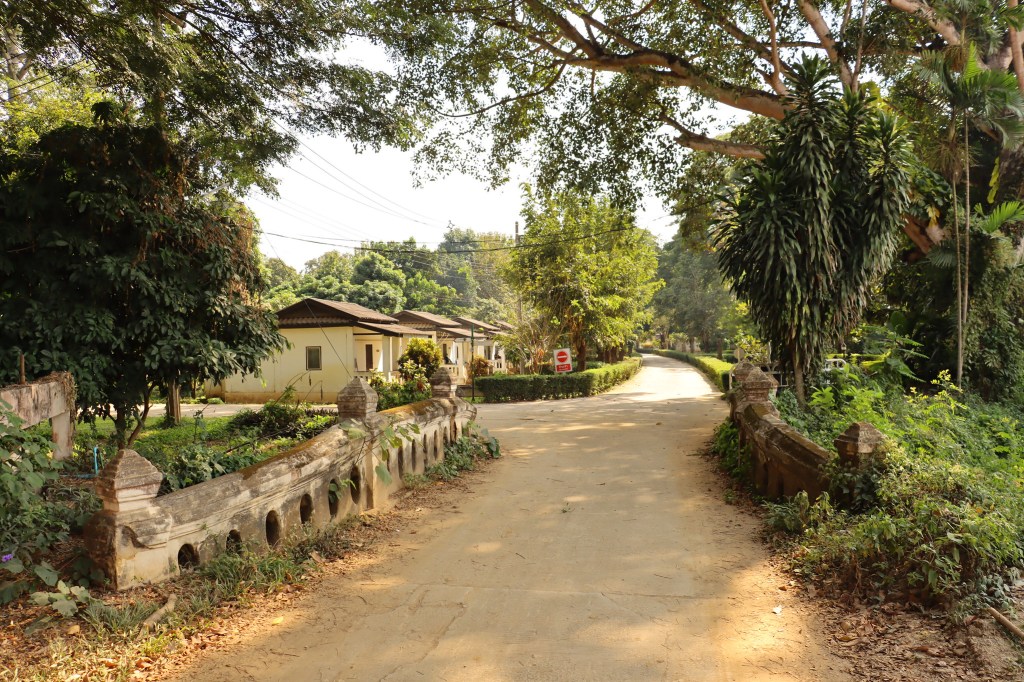
In this text, I talk about the river island of Koh Klang, located a few kilometers south of the city of Chiang Mai.

In the heart of the Northern Thai mountains, an unexpected story emerges from the meanders of the Ping River south of Chiang Mai—the story of the leper asylum, founded in 1908 by Dr. James W. McKean.
Doctor James W. McKean
Born in 1860 in Iowa, USA, his journey is marked by heart-wrenching personal trials, having lost his parents in childhood, followed by the passing of his first wife and a daughter a few years later. However, his perspective on life is tinted with extraordinary resilience.

In 1889, guided by a medical passion and altruistic determination, Dr. McKean embarked on a journey to Siam with his second wife, Laura Bell McKean. Their destiny led them to Chiang Mai, where he became the superintendent of the American Mission Hospital. It was there that the idea of creating a leprosy asylum took root, eventually taking shape in 1908.
While practicing medicine in Chiang Mai since January 1890, Dr. McKean was profoundly moved by the plight of wandering lepers. These patients, rejected by their families and friends, would beg at the gates of the medical complex, seeking food and medicine to alleviate their suffering.

Heart-wrenching scenes remained etched in his memory (as he discusses in his memoirs). A leprous woman came forward, pleading for help to bury her leprous husband who had passed away on a boat near the hospital. On two occasions, leprous men were found dead in public spaces, alone and abandoned in their last hours of miserable life.
The constant pleas of these lepers for alms and medicine seemed to exceed Dr. McKean’s capacity to help. However, the decisive turning point occurred when a lesson in empathy took shape.
As the Christmas season approached, Dr. McKean appealed to foreign residents of Chiang Mai for funds to provide blankets, food, and clothing to the lepers. The response was extraordinary. Residents, guided by local philanthropist David Fleming Macfie, responded generously, establishing an annual tradition that endured for a quarter of a century.

Dr. McKean established an initial camp for lepers downstream of the Ping River. They received food, medicine, and other comforts there. However, their generosity was tempered by the intolerance of local authorities who expelled them, threatening them with death if they returned.
A decisive turning point occurred when Prince Warorot Suriyawong of Chiang Mai, himself a patient of Dr. McKean, became aware of the challenges faced by the lepers. Sensitized to their cause and appreciating the doctor’s efforts, the prince generously offered an island once inhabited by a tumultuous elephant to establish the asylum.
(I will continue this story in my next post, titled « The Legend of the Elephant »)

The beginnings were modest, with over forty hectares of land overgrown with brambles and thorns on Koh Klang Island. However, with the patronage of the « Mission to Lepers » in London, the generosity of foreign residents in Chiang Mai, and the support of visionary Siamese figures like Prince Damrong, the project took off.
Koh Klang Island was cleared and prepared for the construction of the village by the lepers themselves, under the supervision and support of Dr. McKean and his medical team. Thus, this initial episode, marked by the distress of the lepers and the generous response of many, laid the foundations of the asylum, transforming an island once governed by the terror of an elephant into a refuge of hope and healing.

The asylum was officially inaugurated in 1913.
It became a warm community for over three hundred individuals.
The prohibition of marriage on the leper island aimed to prevent the spread of leprosy within the community, though perceived as intrusive, it was part of strict measures to protect collective health.
Daily tasks, from gardening to cooking, infused an active life into the community, and activities like rice threshing added a therapeutic dimension.

In 1917, responsibility shifted to the American Leprosy Mission in collaboration with the American Presbyterian Mission.
Long marginalized and rejected due to the Buddhist stigma associated with leprosy, patients found a new perspective in the Christian faith, discarding beliefs linking their suffering to past karmic faults. Now bound by a promise of liberation, they were freed from the burden of sin and disease. This radical certainty, contrary to Buddhist teachings, became the foundation of their serenity. It’s worth noting that a significant number of the original nine patients were already Christians before their arrival, and their immediate request for a chapel in the modest grass huts attests to the importance of faith in their quest for solace.

Dr. McKean retired in 1931, passing the leadership to his son James Hugh McKean. The asylum, far from being a gloomy enclave, became a place where hope blossomed amid well-tended gardens and buildings constructed over the years.
Ebbe Kornerup dedicated a chapter to his impressions of the Leprosy Asylum in his travel book, « Friendly Siam, » published in 1926:
Outside Chieng Mai there is an ideal leper settlement, on the river, so that it is isolated from the outside world.. (…) Each house stands in its white-fenced garden with a wealth of flowers and creepers – roses, agaves, bamboos, and areca palms or erythrina: a true model village. Each family has its own house, or two live together and share the housckeeping; they do their own cooking and washing. When they are not looking after their gardens, they generally sit by the river and fish or bathe under the shady palm trees. Everything is given them free by the Government, so there is no want.

Thus, the pages of Chiang Mai are filled with the inspiring story of Dr. McKean, from the emergence of a leprosy asylum to the creation of a model village, demonstrating human resilience and a spirit of solidarity that transcends the boundaries of illness.
The iconic buildings of Lepers’ Island:
Throughout the 1920s, the Leprosy Asylum in Chiang Mai underwent a remarkable transformation thanks to the generosity of benefactors. The legacy of Dr. Thomas Heyward Hays, who passed away in 1924, and that of Dr. McClanahan in 1929, enabled the construction of several buildings that are now part of the island’s architectural heritage.
In 1928, Hays’ legacy was used to build a surgical pavilion, an administrative building designed by architect Maung Tan, and the supervisor’s house.

The year 1929 is marked by the completion of the McClanahan Community House, a multipurpose hall that became the jewel of the asylum. This venue dedicated to theater and gatherings symbolized the unity and resilience of the leprosy community.

In 1931, the leprosy community staged a dramatization of the « Prodigal Son » parable in the McClanahan Theater. The performance drew 2,700 attendees across three shows and even earned an article in the distant New York Times.
« This year’s production mas a dramatisation of the parable of « The Prodigal Son, » which was staged in the newly completed McClanahan Memorial Community House. The lepers laughed and danced and sang throughout the performance. Record crowds were present at the three performance. Residents of Chiengmai, about five mile away, came out to the asylum in a stream of automobiles. Others motored from districts twenty and thirty miles away. Hundreds of country people tramped along the roads to see the entertainment » (New-York Times, April 1931)

Chaulmoogra oil is a substance extracted from the seeds of the chaulmoogra tree, native to Southeast Asia. This oil has historically been used in traditional medicine to treat various skin conditions, particularly leprosy.
In the early 20th century, chaulmoogra oil was often employed in the treatment of leprosy due to its antiseptic and anti-inflammatory properties. However, its effectiveness was limited, and with advances in medicine, other treatments were developed, relegating chaulmoogra oil to a more historical role in medical history.

Epilogue
The lepers’ island, originally established to combat leprosy, underwent a remarkable transformation over the decades. After World War II, the advent of effective drugs to treat and cure leprosy marked a turning point. McKean’s successors shifted their focus to rehabilitating patients, involving education, vocational training, and community support.
In the mid-1980s, a broader vision of patient integration emerged, leading to the construction of a new hospital and the expansion of rehabilitation services. Mobility facilities were enhanced, including a prosthetics department and a new wheelchair workshop. The McKean Center also expanded rehabilitation projects, collaborating with families and local communities. Recognizing that some elderly and disabled patients couldn’t return home, a village was established on the island’s north, providing continuous support to these residents.

McKean Senior Center
In the 2000s, the institution diversified to meet the growing needs of the elderly, establishing elderly care services, including the Dok Kaew Gardens, a modern international retirement center. In 2017, the institution changed its name to the « McKean Senior Center, » emphasizing its evolution from a leprosy treatment center to a holistic elderly care center, embodying a steadfast commitment to the dignity and quality of life for the elderly.
In the next post, I will tell you
The Legend of the Elephant Guardian of the Lepers.
A story in 3 parts that I have imagined while researching
the former leper village of Chiang Mai.


Summary
- Foundation of the Asylum: The leper asylum on Koh Klang Island was founded in 1908 by Dr. James W. McKean in response to the plight of lepers wandering in Chiang Mai.
- Generosity and Support: The generosity of foreign residents in Chiang Mai, led by David Fleming Macfie, played a crucial role in the initial funding of the asylum, establishing an annual tradition of support.
- Evolution of the Asylum: Despite humble beginnings on an island overgrown with thorns, the asylum evolved into a warm and self-sufficient community, showcasing human resilience and the spirit of mutual assistance.
- Iconic Buildings: The construction of iconic buildings, such as the Community House McClanahan, was made possible through legacies and donations.
- Medical Transformation: The advent of effective medications led the asylum to focus on patient rehabilitation, involving education, vocational training, and community support.
- Expansion of Services: From the 1980s onward, the institution expanded its rehabilitation services, building a new hospital and extending facilities for mobility, including prosthetics and orthotics.
- Transition to Elderly Care: In the 2000s, the institution adapted to changing needs, developing elderly care services and changing its name to the « McKean Senior Center » in 2017.

Bibliography
- Chiengmai Leper Asylum, 1908-1929, written by Dr. James W. McKean, Siam Outlook, October 1929, pp 366-369
- The Leper Village, 1926, written by Ebbe Kornerup, Friendly Siam, pp 53-56
- Enchanted Land, Foreign Writings about Chiang Mai in the Early 20th Century, by Graham Jefcoate,
- McKean Senior Center History, written by Heather Smith.
Special thanks to Mr. Graham Jefcoate for sharing valuable insights during the guided walk titled ‘Return to McKean,’ organised by Life Long Learning, Payap, on December 8, 2023. His information greatly contributed to the creation of this text.
The text and photos are by Frédéric Alix, 2019, 2020, 2023
 Salaween.blog
Laisser un commentaire