Let’s explore the alleyways of old Bangkok, where the artisan community of Ban Bat resides. In this neighborhood, artisans uphold a centuries-old tradition by handcrafting the iconic monk bowls. These bowls, utilized by Buddhist monks to receive food offerings, embody the elegance of traditional craftsmanship in Bangkok.
The Morning Alms Walk with Monks
Every morning, at sunrise in Thailand, a scene of spirituality unfolds. Whether it’s raining or sunny, in a village or a city, Buddhist monks, dressed in saffron robes, embark on their silent walk, barefoot, through the still quiet streets. It’s the morning alms, an ancient practice called « tak bat, » where devotees offer food to monks to accumulate merits.
Residents wait along the path, offering portions of rice, fruits, and other treats in the monks’ bowls. Kneeling before the monks, residents present food and receive a blessing.
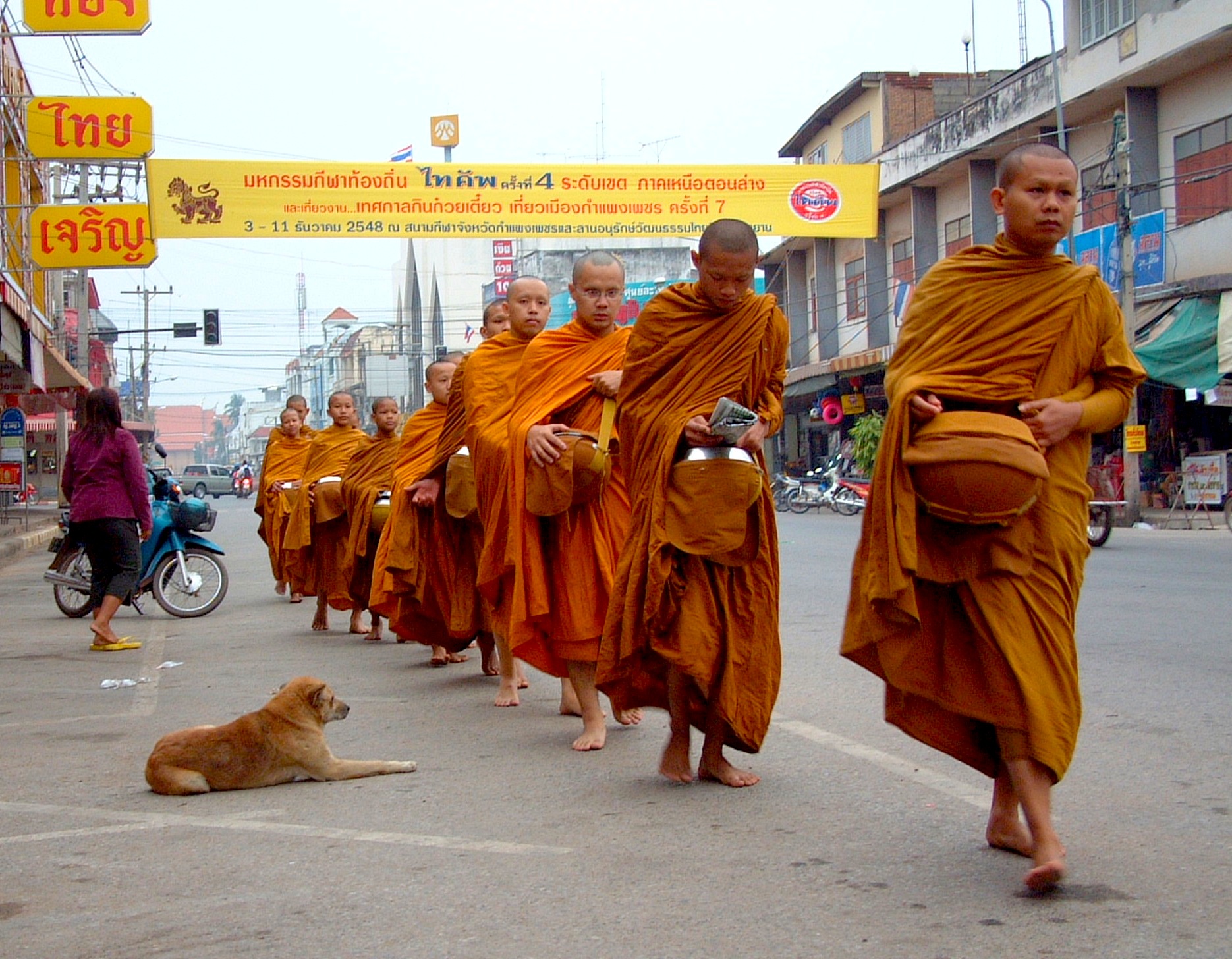
It’s not so much the monks begging for food as it is the residents asking the monks to accept their offerings. This morning walk isn’t just a food collection; it symbolizes the connection and generosity between the community and the monks. It’s an age-old tradition that renews itself every morning, everywhere—whether in villages or bustling cities.

The Alms Bowl
The « Bat » (pronounced Baat), an alms bowl, represents a simple yet crucial object in the daily life of Buddhist monks. Monks carry these large metal bowls at all times to receive food donations. It is one of the 8 possessions allowed for Buddhist monks.
Ban Bat in Bangkok is the last village in Thailand where monk bowls are handcrafted following the instructions from Buddhist manuscripts. Established in the 1700s, it is one of the oldest artisan communities in the capital.
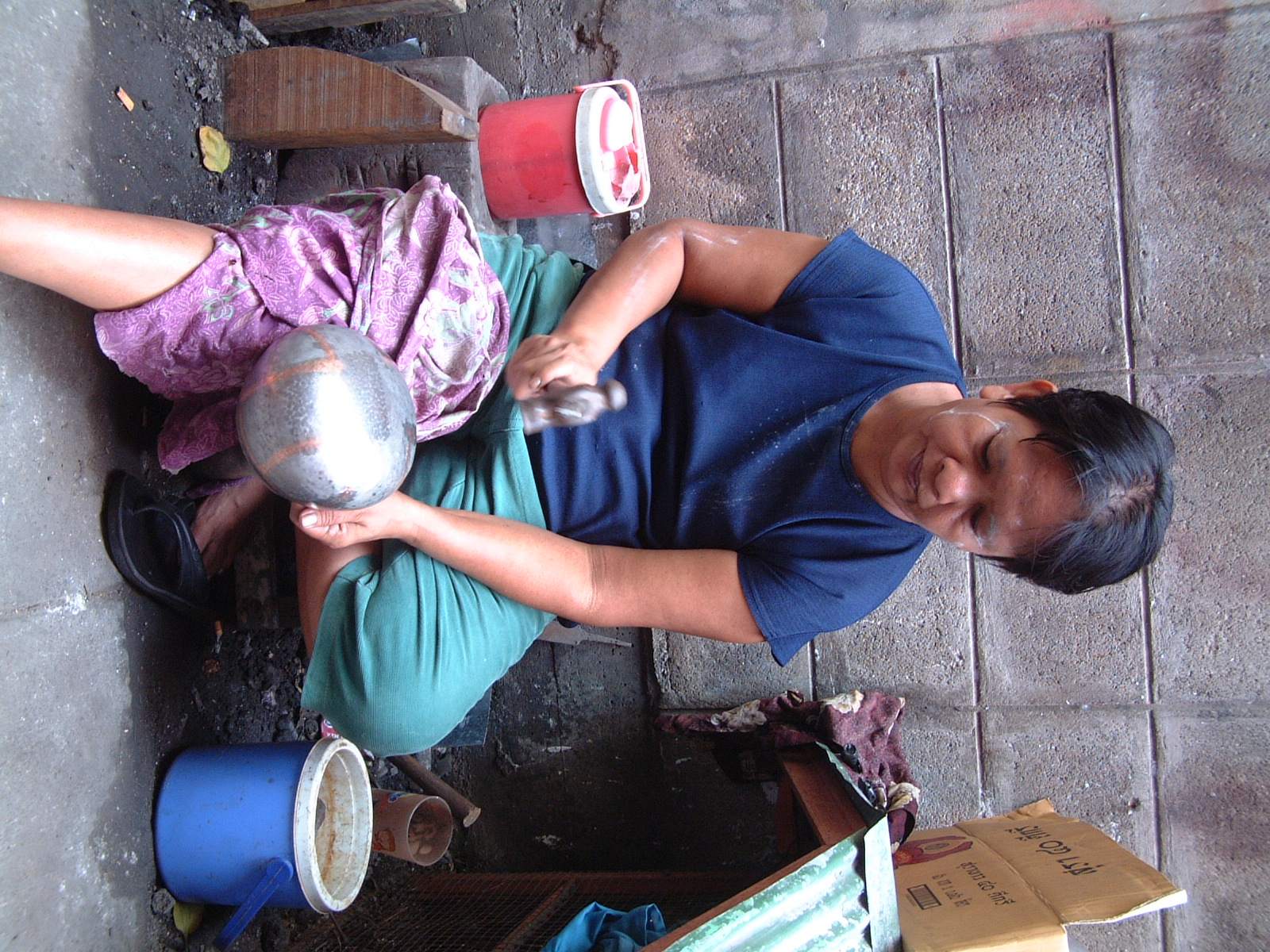
Every step of the Bat manufacturing process is done by hand within the artisan community. These techniques are passed down from generation to generation. However, in recent years, industrially produced bowls, known as « pump bowls, » have taken over the market due to their lower cost. Consequently, many communities that once crafted these bowls have disappeared, except for Ban Bat. This community is the last remnant of a series of villages established in the 18th century by King Rama 1 with the aim of creating monk’s bowls. Here, high-quality bowls are available for direct purchase from the families who make them.
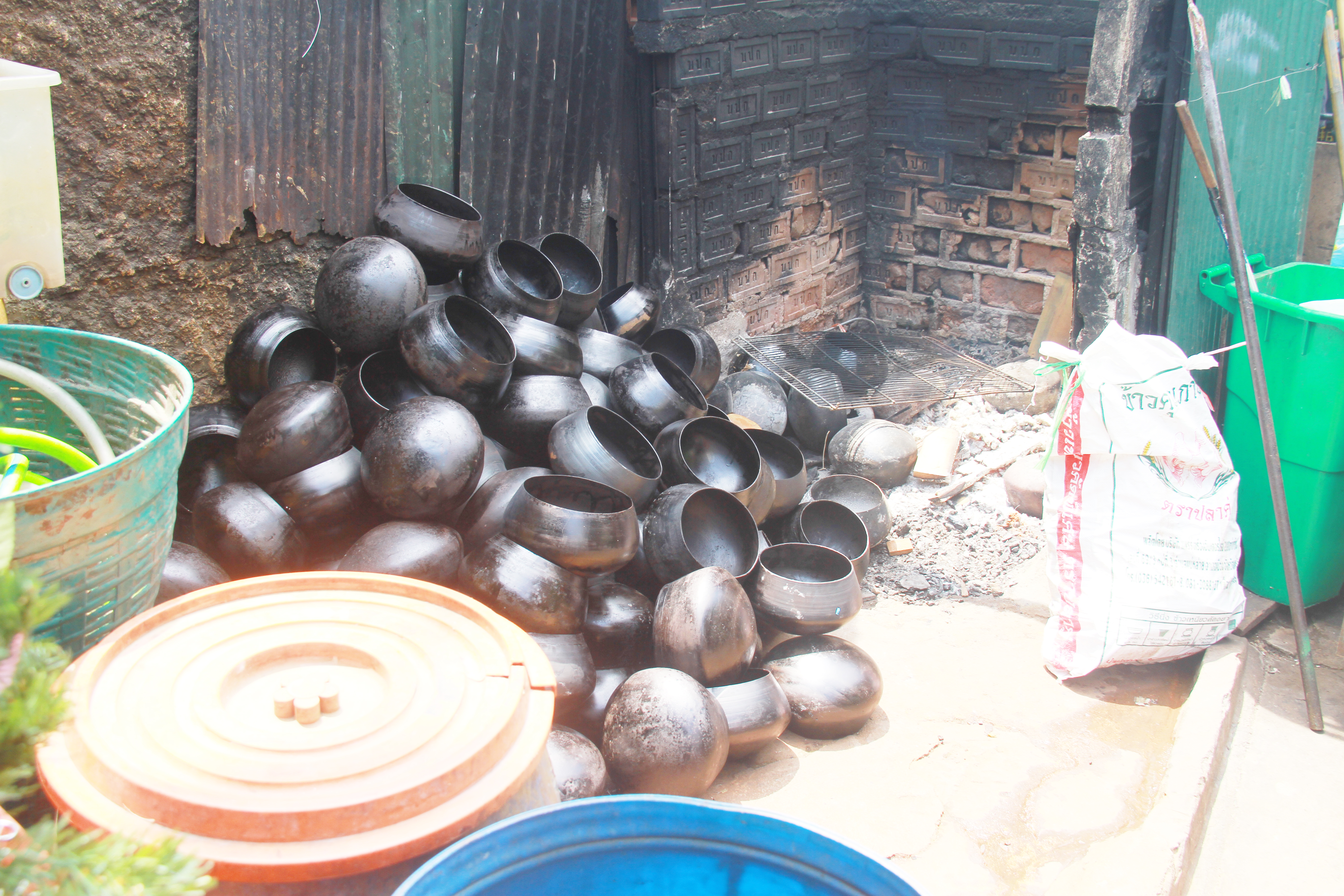
The traditional monk’s bowl is crafted from light metal, and the seams are joined with copper. Some bowls may be darkened in the temple’s fire to protect them from rust. The standard size of a Bat has a diameter of 18 to 20 cm.
My Visits to Ban Bat
In November 2023, I return to the alleys of Ban Bat, a place I had first explored in 2005. Despite the passage of time, the small artisan community remains bustling with activity. As I navigate the maze of lanes, the rhythmic sound of hammers echoes more precisely. As usual, I capture several photos, but to highlight the manual work in motion, I primarily use my camera (you can watch my short video below).
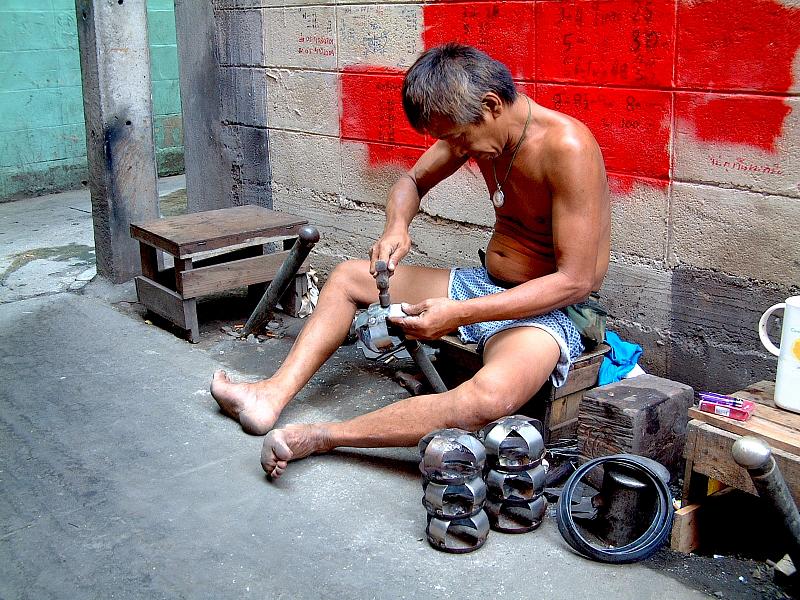
Artisans, stationed along the edges of the alleys and at the entrances of their homes, proudly showcase their craftsmanship. They all warmly invite me to observe their creative world. Each artisan handles a specific stage in the bowl-making process. The bowl thus travels from house to house, with each artisan adding a unique element until it comes to life.
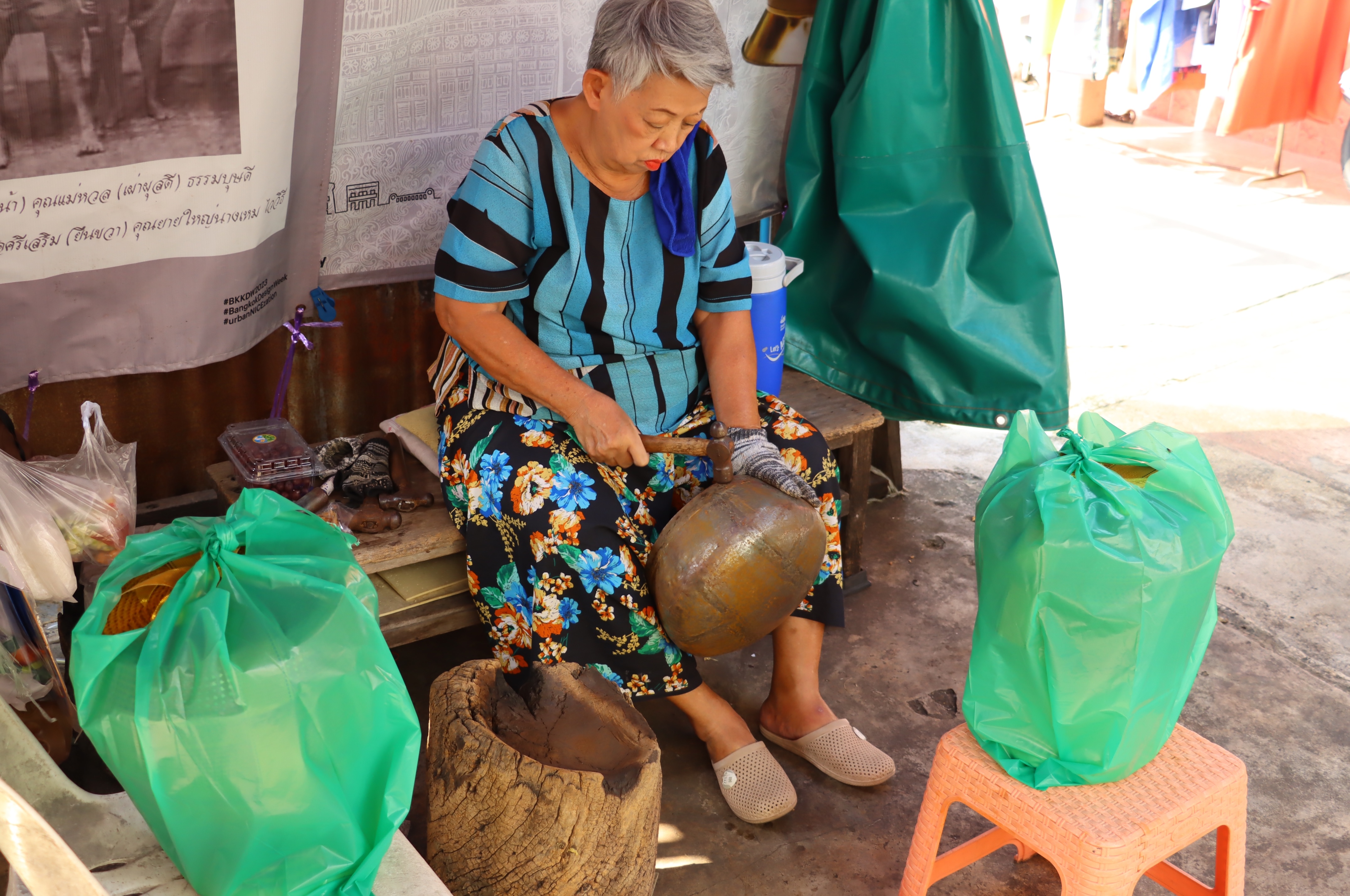
A 72-year-old woman invites me to sit beside her. She shows me a photo of a little girl : her grandmother, the third generation born into this community dedicated to the art of alms bowl making. Born here herself, she has no intention of leaving. She shares that her daughter pursued studies in medicine and has no plans to continue the family’s artisan tradition.
I reminisce about my first visit in 2005, suspecting she might have been the one who sold me the two bowls I purchased. She asks if I donated the bowls to monks, and I admit that I kept them for myself, a response that surprises her.
I show her my photos from 2005. She points out a person who passed away this year (he drank a lot, she adds). The welder, captured in action in 2005, is now napping as he has no work these days.
It’s a moment of exchange where the past blends with the present. Through these visual stories and encounters, I realize Ban Bat is more than just an artisanal place—it’s a community with a history, a evolving life.
Mandala-Inspired Crafting
Crafted from slender steel strips, the bowls take their final shape through precise hammering, reflecting the Buddhist symbolism of the eight seams representing the Eightfold Path of the Buddha.
The Cruciform Base Structure (4 Cardinal Points)
The main cruciform structure is meant to symbolize the four cardinal points. According to Buddhist tradition, each cardinal point has its guardian. Legend has it that each of these guardians offered an alms bowl to the Buddha. To avoid favoring one guardian over the others, the Buddha merged the four bowls into one.
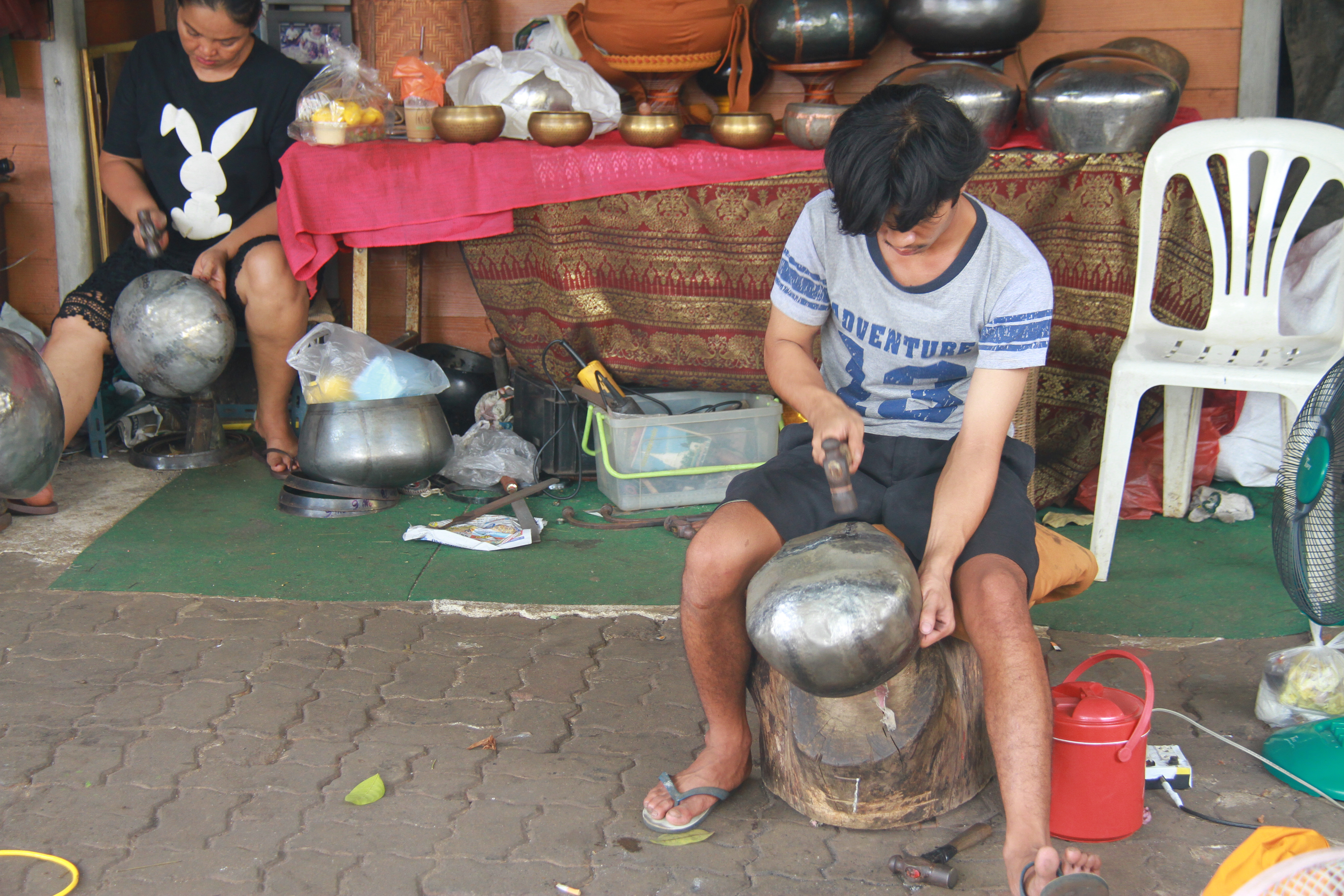
Meticulous Crafting:
Rim Folding: The initial step involves folding the rim of the bowl from a steel strip with a thickness of 3 millimeters and a width of less than 2 centimeters. The length varies based on the bowl’s size.
Base Structure: A measured metal sheet is cut into a cross shape and folded to create the bowl’s base structure connected to the rim piece.
This base structure represents the four cardinal points.
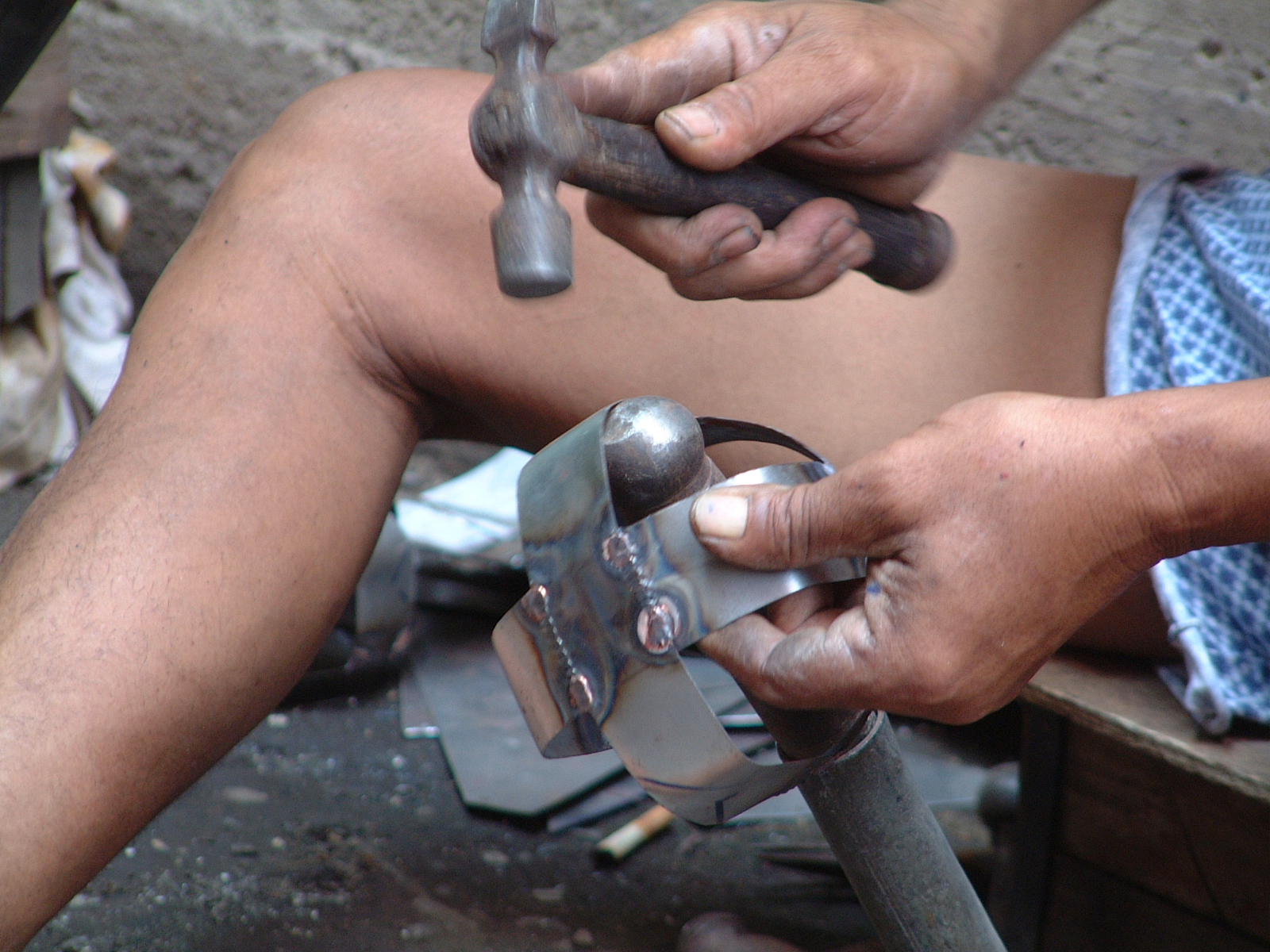
Filling: The four open spaces of the cross are filled with leaf-shaped metal plates.
The mandala, an art of spirituality and awakening, embodies itself in the pattern of the alms bowl. The four spaces between the four main axes are filled, creating a bowl with 8 key parts. Each axis reveals this spiritual balance. The symbols of outstretched arms evoke the connection between artisans, while the circle represents the sun, the universal center. When the bowl is lightly struck, it symbolically radiates the teachings of Buddha in all directions.
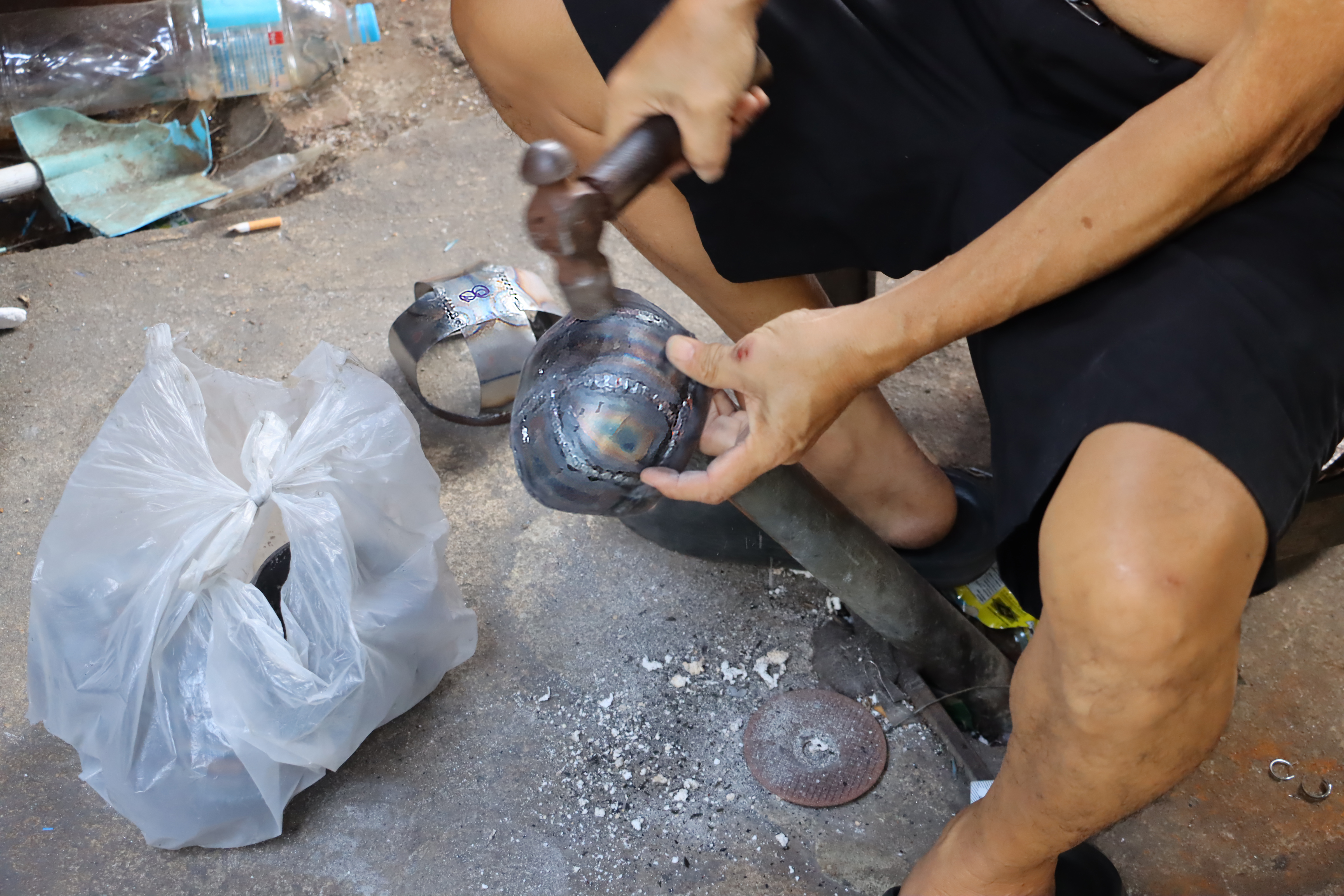
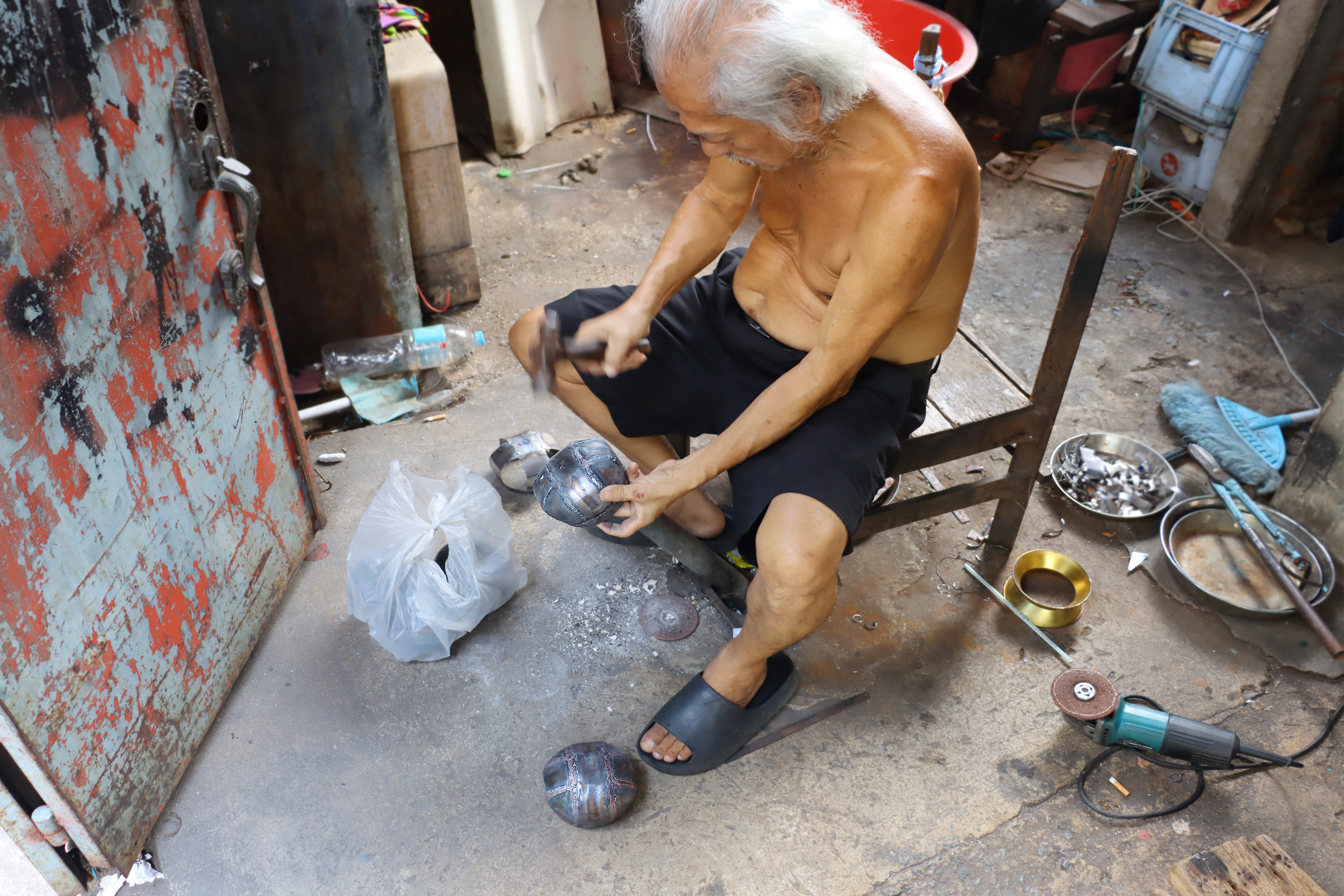
Shaping with a Curved Hammer: A special curved hammer called ‘kon line’ is used to strike the interior of the bowl and give it the desired style.

Curve Refinement: The curve is then refined by striking the exterior against special templates. The bowl is later cleaned with acid before its surface is filed.
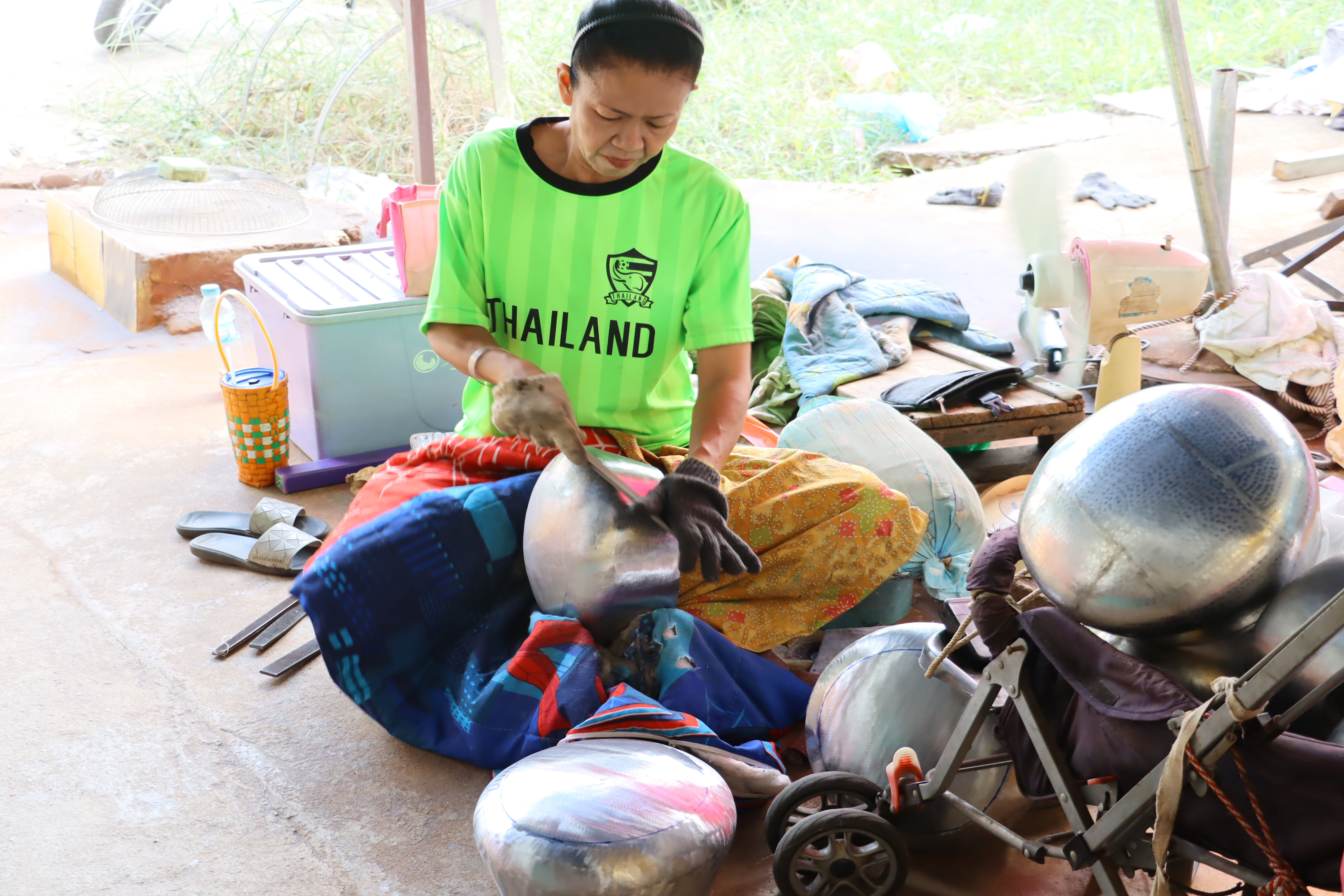
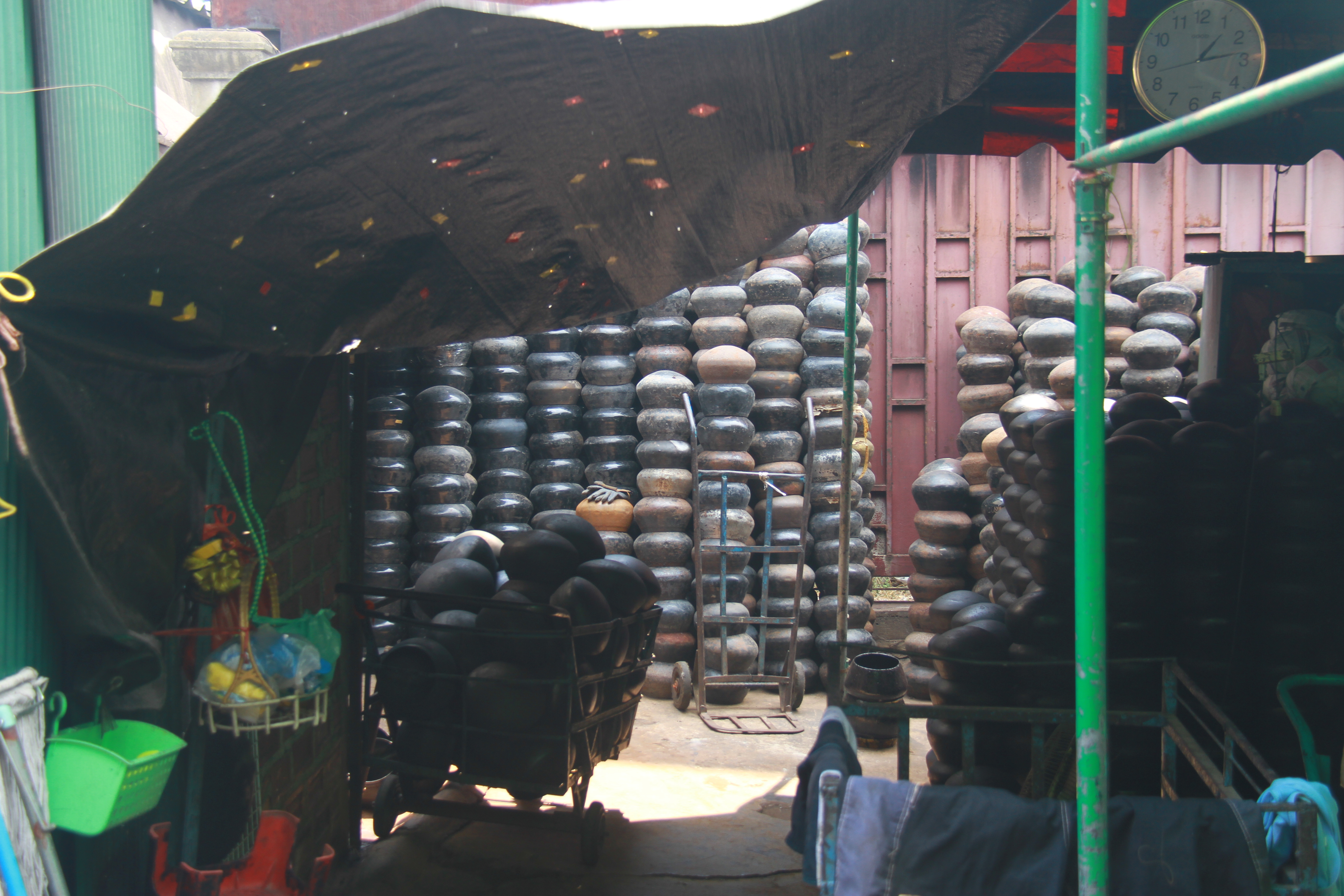
Rust Prevention: To prevent rust, the bowl can be heated with coal, resulting in a natural blackened finish. However, it is now common to treat the bowl with rust-proof oil instead.
Optional Decoration: The last, optional step involves decorating the bowl. It can be colored in green or black, then painted or engraved with Thai patterns, depending on the artisan’s individual preference.

MY VIDEO (2min)
- Rim Formation: Bend the Bat’s rim from a strip of steel.
- Base Structure: Cut and fold a metal sheet into a cross shape for the Bat’s base.
- Fill the cross spaces with leaf-shaped metal plates connected by joints.
- Weld seams and smooth with hammering.
- Shape with a wooden template placed inside the bowl, hammering repeatedly.
- Clean with acid and file the surface.
- Opt for coal firing for a natural blackened finish or use rust-proof oil.
- Optional Decoration: Optionally color, paint, or engrave Thai patterns based on the artisan’s preference.
Tribute to Founding Teachers:
In Thai culture, it’s common to pay homage to the tools of one’s trade and founding teachers. In Ban Bat, two unique shrines are revered by the community. PolFeukk Bat, the Honorable Master Artisan of Bat, is considered the first to invent the traditional method of Bat fabrication. Ban Bat residents venerate him as their master artisan, even organizing a ceremony dedicated to Por Pu Kru Bat during Songkran, the Thai New Year. Another honored element is the « Tao Soob, » two pieces of wood used in the past for welding.
Summary:
- Handcrafted monk bowls from Ban Bat symbolize traditional craftsmanship in Bangkok.
- These bowls, with a diameter of 18 to 20 cm, serve Buddhist monks for receiving food offerings.
- Nestled in the heart of old Bangkok, Ban Bat’s alleyways house a community of artisans dedicated to bowl-making.
- Some monks prefer larger bowls, measuring 22 to 25 cm, adhering to their strict one-meal-a-day practices.
- The traditional fabrication method involves meticulous steps, from rim folding to shaping with a special hammer.
- Established in the 18th century, Ban Bat remains the last stronghold of this tradition, despite the rise of industrially produced bowls.
- The community proudly perpetuates this heritage, with each bowl carrying the history and wisdom of past generations.
For more information:
The eight allowable possessions for Buddhist monks, known as « Attha Parikkhara, » are essential items permitted by Buddhist monastic discipline. These eight items include:
- Robe (Sanghati): The traditional attire of Buddhist monks.
- Alms Bowl (Patta in Sanskrit, Bat in Thai): A bowl used to collect food during the daily alms round.
- Needle (Suladda): Used for repairs and maintenance of monastic clothing.
- Razor (Valuka): Used for shaving the head and beard.
- Belt (Kusa): A belt worn around the waist.
- Water Filter (Pisitthi): Used to filter water before consumption.
- Water Bowl (Tumra): A bowl used for drinking water.
- Air Filter (Yantra): Used to prevent inhaling insects or small creatures.
These eight possessions are intended to provide monks with basic necessities while promoting simplicity, modesty, and material detachment.
Text, pictures and video ©Frédéric Alix, 2005, 2017, 2023
 Salaween.blog
Laisser un commentaire