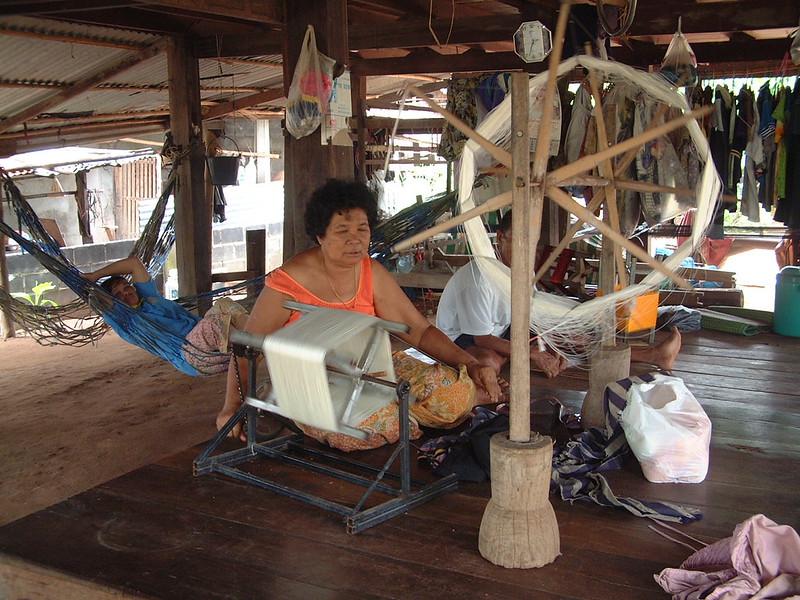
In ancient times, long before the founding of Chiang Mai and before this land was known as Lanna, it was home to the Lawa people.
This fictional tale is the first in a series of three about the Lawa, the indigenous people of the Chiang Mai region.
Prologue: The Guardians of the Mountains

The dense tropical forest enveloping the Doi Pui massif is shrouded in darkness when the silence of dusk is broken by a deep rumbling.
The sound comes from Ya Sae, a towering ogress, the spirit of the mountain, scratching her belly impatiently.
Ya Sae:
— I’m hungry!
Sudeva, her son, a younger but equally formidable spirit, sighs and casts a resigned glance at her.
— Mother, you just ate! Barely a few hours ago, you devoured some hunters and the boar they had caught. How can you still be hungry?
Ya Sae stares at her son, looking surprised, as if his question makes no sense to her.
— Of course, I’m still hungry! Nothing is ever enough! Those humans were gone in an instant, and the boar was too small! (She gazes toward the valley.) We are bound to this land, and the land is always hungry.

The third giant, Pu Sae, lets out a guttural laugh that makes the treetops tremble. As an ancient and revered deity, he embodies both the raw strength and wisdom of the mountain.
Pu Sae:
— Ah, Sudeva, you are still young! We feast on anything that walks on two or four legs—this hunger is eternal, just like us. Humans fear us, and that is as it should be. It is the balance of nature.
Ya Sae: (with a predatory smile)
— Yes, fear… but also respect. They know we are the guardians of these mountains, that they must honor us, the spirits of nature. Without their fear, they would no longer bring us offerings. We must remind them of this bond.

Sudeva: (hesitant)
— But… I wish they understood that we are not here just to devour them. We are part of their world, just as they are part of ours. We protect them.
Pu Sae: (with a piercing gaze)
— Understand? They are too small to grasp the depth of this bond. They see only ogres, hungry for the pleasures of flesh, but our hunger is that of the mountain itself—an eternal cycle. We watch over them, and their fear is simply part of this balance.
Ya Sae: (scowling)
— Perhaps they need to be a little more afraid. Praying to distant deities, they forget the importance of our mountains. We must feast for pleasure to maintain balance. This is how the land and its beings live in harmony.
As night falls over the mountains, the shadows of the three giants stretch across the valley. These cannibal spirits—both terrifying and essential—embody the untamed forces of nature. They represent a powerful and enigmatic balance between the human world and the wild, a balance they fiercely protect with insatiable hunger in the mountains of Doi Pui and Doi Kham.

Chapter 1: A Prayer Is Heard
Chapter 1: A Prayer Is Heard
A young man sat under a great tree, alone in the dim light of the forest, troubled by heavy thoughts. Filled with hope despite his fear, he lifted his voice in prayer.
— O Buddha, I implore you, come to us. In our village, where darkness reigns, where cannibals roam and headhunters lurk, we are deprived of the peace you teach. The spirits of our ancestors haunt these mountains; we fear them. Yesterday, our clan leader sacrificed a young virgin girl to the mountain spirits. They say they protect our land, but the price we pay is too painful. May your wisdom enlighten our souls so that we may find peace in this wild and troubled world. Come, O Buddha, teach us love and respect, so that we may build a better future.
His voice faded into the shadows of the trees.
In a spiritual realm, the Buddha heard this prayer and felt the distress that weighed upon the land of the Lawa. He understood that the situation called for direct intervention.
The untamed land of the Lawa is not a place where the spiritual laws of India can simply be applied without adaptation,he thought. This is a world where every stream and every tree holds deep meaning, where spirits—though feared—are the protectors of the land. Any attempt to bring peace and compassion must honor the sacred bond between humans and nature.

The Buddha decided that he must travel to the land of the Lawa in person, knowing that peace had to be established between humans, nature, the mountains, and their spirits.
Thus, his journey to Chom Thong began, carrying a new vision of peace—one where the teaching of compassion would also embrace the powerful forces of the earth.
2. Chom Thong
After spending seven days meditating on a mountain, the Buddha descended from the sacred heights and made his way toward Chom Thong, crossing a dense forest for nearly twenty thousand meters to reach the Mae Ping River. Upon arriving at its banks, he saw a Lawa farmer using a waterwheel to irrigate his fields. Startled by the Buddha’s presence, the farmer hastily removed the turban covering his head and used it to wash the feet of the Blessed One. As the fabric touched the water, it miraculously turned into gold.
The farmer said to the Buddha, “O Blessed One, by your kindness, remain among us in the high valley of the Ping River.”
The Buddha nodded with a serene smile, agreeing to spend the night in the Lawa village. As an offering, the farmer brought him two vegetable curries. The Buddha accepted them with gratitude and shared a moment of silent meditation and contemplation, leaving a deep impression on the farmer.

Buddha: What does the water of this Ping River mean to you?
Farmer: This river is our source of life, descending from the sacred mountains of Doi Pui and Doi Luang, which we consider the mother of all our rivers.
Buddha: I see. In other regions, such as along the Ganges, people also venerate a river. What is the difference in your beliefs?
The Lawa farmer thought for a moment, his gaze sinking into the waters of the Ping River, as if drawing his answer from its depths.
Farmer: The difference is that here, we know the source of our water, unlike the people of the plains who worship the river without knowing where it comes from. We call the springs on our mountains Khun, we respect them, and we honor the spirits of nature. The mountain giants, though sometimes dangerous, are also revered as ancestors. They are the link that unites our people to the land. We must satisfy their needs and let them devour the flesh of our most appetizing companions, even though it is terrible for us.
The Buddha, listening attentively, placed a comforting hand on the farmer’s shoulder.
Buddha: Do these spirits frighten you?
Farmer: Yes, but we need their protection, and they make our harvests abundant.
The farmer paused, then continued.
Farmer: Some of us have read your words, O Buddha. But many believe that if we focus on our personal development, we will neglect the spirits of nature. We must honor our mountains, our rivers, and the spirits that dwell here. If we abandon our beliefs, we will have poor harvests and die of hunger.

Buddha: Respecting the nature that nourishes you is wisdom. The path to enlightenment does not ask you to abandon these traditions but to add inner peace to them. The two can coexist, like water flowing between the stones without moving them.
The farmer nodded, moved by the wisdom emanating from the Buddha’s words. The teachings he had heard in his village now seemed clearer to him.
That evening, the farmer murmured a song of gratitude to the river and the mountains, aware that his life had been profoundly transformed.

Chapter 3: Sudeva observes the Buddha silently.
After his encounter with the farmer in Chom Thong, the Buddha chose to settle on a rocky promontory to meditate, facing the peak of Doi Pui. Around him, the mountains seemed to tremble under the intense radiance of the sun. In this place, the Buddha could feel both the suffering and fear of the humans and the voracious presence of the cannibal giants.

Barely hidden behind the rocks, Sudeva, the son of Pu Sae and Ya Sae, watched the Buddha with a curious gaze. This giant, of imposing stature and formidable strength, possessed a soul more sensitive than that of his parents. Accustomed to seeing humans flee before him, he was surprised to see this man, dressed in a simple ochre robe, sitting peacefully with his eyes closed, without a trace of fear on his face.
« This man… Why does he not feel hunger? Why does he not feel fear? » Sudeva wondered, captivated by the serenity radiating from the Buddha.

The more he observed, the more he was moved by this mysterious calm. Something about the Buddha’s presence seemed to contradict everything Sudeva had believed about humans: here was a being who neither sought to dominate nor to defend himself but seemed in harmony with the entire universe. The mere sight of this man in meditation awakened in Sudeva a strange mix of respect and curiosity.
« He is free from all desire, » Sudeva thought.
In an unusual impulse, Sudeva felt the need to do something for this mysterious being. Silently, he moved away and searched for fresh water at the nearest spring. Carefully, he filled a stone bowl with the purest water and placed it a few steps from the Buddha before retreating into the shadows of the trees.

When the Buddha opened his eyes, he immediately noticed the bowl of water and the presence of the giant silently watching him. He picked up the bowl, looked up at Sudeva without the slightest trace of fear, and gently inclined his head in a gesture of gratitude. This simple act stirred a wave of new emotions in the giant’s heart—he had never before received gratitude from anyone.
Overcome with confusion and an emotion he did not understand, Sudeva retreated into the forest. Yet, he could not resist returning in the evening to watch the Buddha in meditation. He felt something profound and inexpressible—an unfamiliar peace that seemed to calm and soothe his own inner turmoil.
4. The Sermon and the Peace Accord at Prabudda Bat 4 Roi
The Buddha chose the perfect place for the peace gathering: Prabudda Bat Si Roï. There, on a large rock, he found the footprints of three Buddhas who had come before him. He added his own footprint to them.


The surrounding nature exuded serenity, yet an invisible tension thickened the air as the forces of the forest drew near. At that moment, three giants emerged, making their way toward the Buddha with the intent of devouring this unusual human. They were Grandfather Sae, Grandmother Sae, and their son, Sudeva.
Upon spotting the Buddha, Grandfather Sae declared with satisfaction:
— What luck I have today! A feast fit for a king awaits me!
But before they could strike, the Buddha addressed them with a voice filled with compassion and wisdom:
— O Lords of the Yakkhas, do not commit this act. The consequences would be dire for both you and this entire land.
At these words, Grandmother Sae, who had stepped closer, stopped her husband with a gesture. She had just recognized him.
— Stop! This is the one whom Mother Thorani, the Goddess of the Earth, once protected. She saw in him a being with a pure heart.
Then, turning to the Buddha, she asked:
— You are no ordinary mortal, are you?
The Buddha responded with a serene smile:
— That is true. I bring a message of peace to the beings of this land, to end the suffering that afflicts the people who live at your feet.
Grandfather Sae protested:
— But that is how nature works! The great devour the small—that is the way of the world. Even Mother Thorani knows this!

In a calm tone, the Buddha replied:
— No, Pu Sae. Nature works differently. The tiger eats to survive, not out of insatiable appetite. You, however, seem to eat without ever feeling full. This cycle of greed is not the natural cycle.
You have tried to fill a void by consuming human flesh for pleasure, but this pursuit will never bring you peace. On the contrary, this insatiable hunger keeps you trapped in suffering.
Just like those who relentlessly chase fleeting pleasures—whether through flesh or the desire for material possessions—you are caught in a cycle of dissatisfaction. Every bite you take only increases your hunger. This insatiable craving is similar to those who seek endless conquests without ever forming true human connections. You are alone and empty.
True fulfillment lies in the love we share with others.
When the Buddha finished his sermon, he smiled at the giants, and a moment of silence followed.
Sudeva, the young giant, spoke up:
— Buddha, I have heard your words before in the Three Baskets of Wisdom. You speak of ending suffering, and that resonates with me. I no longer wish to be the cause of pain.
The Buddha looked at Sudeva with kindness and added:
— Sudeva, you have a noble heart, and I see that you are ready to listen. And you, Pu Sae and Ya Sae, you are hungry spirits, but deep down, you are unsatisfied and alone.
He paused, then continued in a gentle voice:
— Imagine a world where you no longer need the suffering of others to find contentment. By renouncing this practice, you could finally experience inner peace. Sudeva, I sense that you are ready to guide your parents toward this path of compassion.
A silence settled in. The Buddha’s words echoed within them, challenging their very nature. Grandfather Sae spoke in a sharp tone:
— Humans are not to be trusted. If they stop respecting the spirits of nature, they will destroy everything.
— If humans follow my teachings, they will commit no crimes, but I agree that they must maintain their worship of spirits as a link to the tangible world. If they respect creation, then you will grant them good harvests. But you can no longer eat them or terrorize them. You must establish a relationship of mutual respect.
Then, Grandmother Sae spoke:
— What you ask of us is a great effort. I am not sure I can give up human flesh forever. I am willing to try as long as you are alive, but I promise nothing if you die.
— I will live as long as there are people who recite my words and meditate on their meaning.
— That will take a long time… Could I at least taste one human per year?
The Buddha gently shook his head:
— That is not possible. But I offer you a compromise. Every year, the prince of the land will offer you a buffalo if you renounce human flesh forever.
Sudeva immediately bowed his head in acceptance.
— I choose the path of peace. I renounce the desire for human flesh and will turn to meditation and nature for my strength. I will become a vegetarian.
— I commend you for your choice, Sudeva. Pu Sae and Ya Sae, if you accept everything that has been said, then we shall build sanctuaries to spread my teachings. You will have a place in these sanctuaries, and humans will honor you as guardian spirits, fostering harmony and mutual respect.
— Are you saying that even our female spirits (and we have many) will be venerated in your temples? Ya Sae asked, adding with an ironic smile, They are not very open to feminism, the monks of your temples.
— The path promised for this land is one where my teachings and your guardian spirits will coexist. The sanctuaries will honor nature and harmony among all beings.
Touched, Pu Sae and Ya Sae, though hesitant, removed their fangs and vowed to follow the conditions set by the Buddha. The Buddha blessed them, plucked a strand of his hair, and handed it to the giants.
— Choose a place that you consider important and enshrine this relic of my physical body in a stupa. By bowing before this relic, remember the path of compassion and harmony with all living beings. In doing so, you will find fulfillment and serenity.

Ya Sae brought the relic to Doi Kham, where she built a stupa to honor her commitment. Every day, she roamed along the mountainside, feeding on the offerings that humans placed in the San Pra Phum spirit houses. Although she respected the agreement made with the Buddha, a subtle temptation gnawed at her. She could not help but smell the scent of human flesh, a fragrance that awakened memories of her cannibalistic past. Watching humans play in the streams, she wondered if she would one day succumb to that temptation. Hanging from a tree, a portrait of the Buddha swayed gently in the wind, reminding her that as long as he was alive, she had to keep her promise for another year. The struggle between her old desires and her newfound commitment grew more intense, pushing her to verify each year the Buddha’s vitality through the fervor of human devotion.
Pu Sae climbed to the summit of the mountain called Doi Oichang and meditated on the Buddha’s teachings. As a guardian of the law, he found nothing in the Dharma that contradicted the laws of nature. He was determined to uphold the agreement with the Buddha, as long as humans honored the natural order. From atop Doi Oichang, Pu Sae watched over life in the Ping River Valley.
Sudeva became a novice monk for a time to study the Buddha’s scriptures, then renounced monastic life to become a hermit, settling in a cave near Doi Oichang. Today, he is known as the Sage of the Mountain, called the Hermit Suthep.

Text and photos : © Frédéric Alix, 2024
This text is part of a series of three writings about the Lawa.
In the next text, we will meet Vilanka, a powerful clan chief with a broken heart.
Bibliography:
- Nimmanahaeminda, Kraisiri. (1967). The Lawa guardian spirits of Chiangmai. In the Journal of the Siam Society 55.
- Ongsakul, S. (2005). History of Lan Na. Chiang Mai: Silkworm Books.
- Penth, H. (2004). A brief history of Lanna: Northern Thailand from past to present. Chiang Mai: Silkworm Books.
- Rhum, M. R. (1987). The cosmology of power in Lanna. Journal of the Siam Society, 75, 91–106.
- Satyawadhna, C. (1991). The dispossessed: An anthropological reconstruction of Lawa ethnohistory in the light of their relationships with the Tai (PhD thesis). Department of Anthropology, Research School of Pacific and Asian Studies, The Australian National University, Canberra, ACT.
- Wichienkeeo, A. (2006). The Lua of Lanna: A study from Lanna archives. In C. Satyawadhna, Community rights in Thailand and Southeast Asia (Project code RDG4210014V12, pp. 165). Thailand Science Research and Innovation.
- Wyatt, D. K. (2003). Thailand: A short history. New Haven, CT: Yale University Press.
- Young, G. (1962). The hill tribes of northern Thailand. Bangkok: The Siam Society.
- สุรพล ดำริห์กุล. (2567). เมืองประวัติศาสตร์เชียงใหม่ คุณค่าอันโดด. กรุงเทพฯ: เมืองโบราณ.
Pr. Suraphon Damrihkul, La ville historique de Chiangmai, valeur universelle exceptionnelle.


Laisser un commentaire