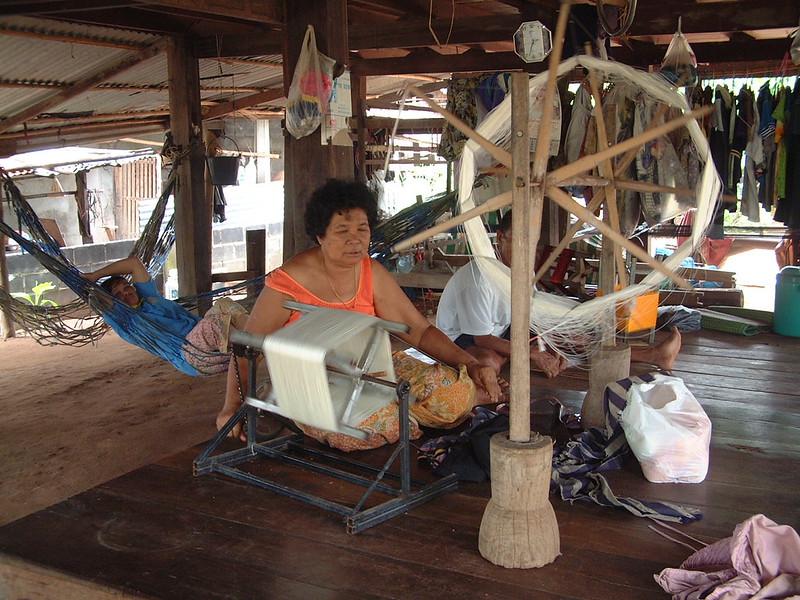
Set between the kingdoms of Lanna and Sukhothai around the 14th century, this work of historical fiction continues my series dedicated to revisiting the ancient legends of Lanna.
Chapter I: The Hidden City
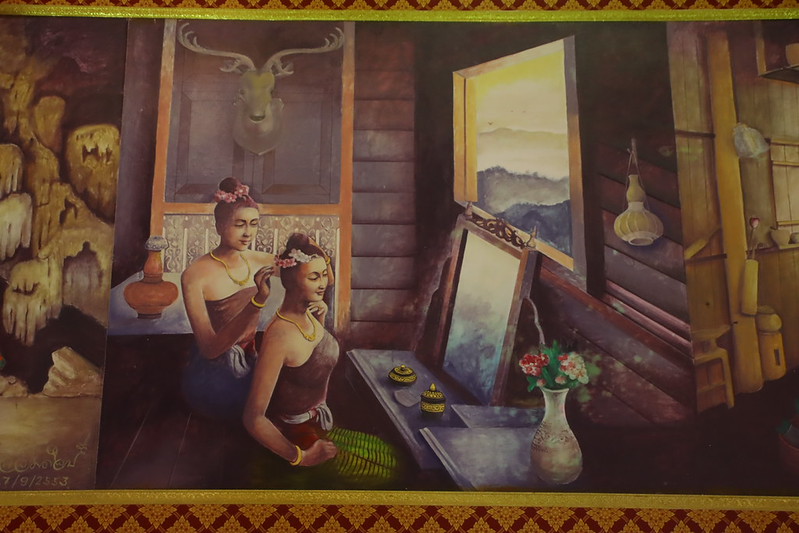
Official History loves solid structures, brick walls, and administrative parchments. In the low rice plains of Sukhothai and lower Lanna, we were proud of this rigidity. We considered ourselves the proud heirs of Queen Jamadevi, that legendary Mon sovereign who, centuries before, had traveled up the river to plant high culture, bringing the Tripitaka to the North. Her people had received the sacred scriptures from the hands of Sinhalese missionaries from the island of Lanka. For our King and for his people, following this written Dhamma was the very foundation of just governance. To be civilized meant building fortified cities (Mueang), regulating social space through decrees, and controlling the movement of goods.
The Lawa, the people of the forest, were tolerated on the periphery. An ancient pact, it was said, had been sealed between the Buddha and their ancestral spirits, Phu Sae and Ya Sae, so that the plain would manage the order of men and the mountain the invisible order of nature. The appeased spirits had promised to no longer devour humans. But the State of the plain has a hunger that prayers cannot satisfy. To prosper and extend its power, our King needed to control the high valleys and integrate independent enclaves into his tax registry. This is how I was sent to Laplae. Not at the head of an army, but armed with a brush and a small bottle of thick soot ink. My mission: to infiltrate, census, and map this geographical anomaly hidden in the mists of the border.
The Spy’s Report (Black ink on court paper)
« To Your Majesty. I have crossed the steep ridges to enter the hidden valley of Laplae. My entry was not by chance. At the edge of the mist, I spied a mountain woman hiding a sacred cloth under a bush, a weaving sheet that seemed to be the key to entering their territory. By taking this object, I forced her to guide me through the secret paths.
My first observation on site is a shock to reason: this city has neither fortifications nor locks on the doors. Wooden chests remain wide open under the porches of the houses. I recorded this first judgment in my notes: « These people are culpably naive. It is a city of widows (Muang Mae Mai), the men probably having died in past wars or fled out of cowardice. The society is vulnerable, left defenseless in the hands of women. »
They welcomed me without asking questions, but imposed a strange rule upon me, which I find almost childishly simple: « Here, the rule is to never tell a lie. » I pretend to follow their custom so as not to arouse suspicion. I observe that the women exhaust themselves in the mud cultivating a yellow root: turmeric. Accustomed to evaluating the power of Your Court by the weight of gold and silver, this plant seems worthless to me. I continue my surveys, counting their stocks in secret. I have married one of them to complete my infiltration, settling under her roof according to their strange matrilineal customs where the man abandons his own clan to settle into his wife’s. »
The Matriarch’s Chronicle (Palm leaf incised with a sharp point)
« A young man with soft hands has arrived from the plain, sent by his King to measure our lives and weigh our freedom. His eyes count our baskets of turmeric. He believes we are defenseless widows because our men do not sit in the center of the courtyard to give orders and clash their spears. He does not see that our strength is not displayed on walls.
We know who he is. We know who he writes for. His entry by stealing the cloth from the edge betrayed his origin: he comes from a world that takes by trickery what it does not know how to ask for. But we do not want war with the plain, for blood corrupts the earth. So, we save his face. We pretend to believe his stories of being a lost traveler. We impose our only armor, our only border upon him: never tell a lie. It is not the absolute truth of the sages that we demand from him, but the absence of lies. As long as he does not introduce this poison under our porches, Laplae is safe and his King stays at the door. »

Chapter II: The Men of the Shadows
The Spy’s Report (Black ink on court paper)
« To Your Majesty. The moons pass and my certainties as a scribe crumble against the reality of this valley. I have recorded a fact that defies the legal treaties of our world: despite the total absence of locks, bolts, and guards, no theft occurs in Laplae. Passing merchants leave their burdens under the porches without fearing the night. In our land, the abundance of decrees tries to contain the greed of men. Here, the absence of lies seems to dry up crime at its source. Trust is not a weakness; it is an architecture.
This afternoon, while I was looking for the mountain durian path for my mapping, a man came out of the shadow of the trees. He carried a burden of wood and game. His skin was tanned by the sun, but his eyes had the clarity of rock water. He stopped and looked at me fixedly. I felt a strange shiver, the kind of feeling you get when you stand before a mountain panorama and the void is just a step away. I broke protocol to question him, seeking to understand where the men of this city were hiding. »
THE SPY:
Since my arrival, I only see women managing the homes and settling disputes under the great banyan tree. Where were you?
THE MAN OF LAPLAE (smiling, putting down his burden):
We work outside, on the steep ridges, and in the deep forest. Our role is to protect the entry points, negotiate with the spirits, and feed the earth. Here, it is the women who own the soil, govern the village, and guard the altar of the ancestors. We return often, but we do not come to command. The peace of our people holds because the mothers govern the house while we watch over the edge.
THE SPY:
In the markets of Thung Yang, they whisper terrifying stories about this valley. They say the woman who rules this town kills and devours the men who dare venture here. My companions-in-arms are convinced your head mothers sacrifice them.
THE MAN OF LAPLAE:
The plain has a fertile imagination when it is afraid of what it does not possess. Your ministers believe that not returning means being dead. They cannot imagine that a man can enter here and deliberately choose never to return to serve your King. Look at me. My grandfather came from Chiang Saen, far up in the North, when the armies burned our ancient city. The survivors, hunted and exhausted by the war, found refuge in these folds of the mountain that the sun leaves earlier. Laplae is not a tomb for men; it is their sanctuary.
THE SPY:
But how can a people of refugees hold out without soldiers? Our King of the plain builds citadels to protect the Dhamma and the sacred scriptures. Do you not want our laws to order the chaos of the world?
THE MAN OF LAPLAE:
Your King does a noble work by erecting walls; the plain needs bricks to contain its rivers and its crowds. We do not blame his justice; it is made for cities. But our order comes from further away. We have inherited the wisdom of the ancient Lawa, those who know the language of the trees and the breath of the spirits of the forest. We do not seek to dominate the earth; we listen to it. Our women govern the houses because they are the guardians of this listening.
(The man kneels and touches the muddy soil of the plantations)
Look at this earth. It is our only judge. Do you know the story of your Buddha? When the demon Mara came to try to break his meditation, the Buddha did not raise a sword. He simply touched the ground with his fingertips, calling the Earth to witness his righteousness. It was then that Phra Mae Thorani, the holy Mother of the Earth, sprang from the ground. She wrung her long hair, and the rivers of pure water that flowed from it swept away the armies of illusion.
Here in Laplae, we live under the gaze of Mae Thorani. The absence of lies is our way of keeping her waters pure. If we lie, the soil becomes corrupt and the mist clears away. It is not our spears that make intruders disappear; it is the truth of the Earth that rejects them. Those who accept this transparency stay and forget the war; the others wander on the border, mad with regret, blinded by their own trickery.
THE SPY:
Does your people then refuse everything that our cities are building? A King has united the neighboring plain under the name of Lanna, building his power on a million paddy fields. This endless network of canals and flooded plots makes the greatness of our peoples and secures the rice of our children. Do you not want this mastery to order the world?
THE MAN OF LAPLAE:
We refuse nothing; we preserve what you sometimes forget to cultivate in your royal courts. It is a noble work to discipline the water of the plain, and your King is right to rely on the geometry of his canals. Look at my cousins who live higher up, toward the ridges of Nan. They are called the people of the Yellow Leaves. They possess nothing and sleep under shelters of foliage. As soon as the leaf turns yellow, they go away, leaving the earth untouched.

The Matriarch’s Chronicle (Palm leaf incised with a sharp point)
« The stranger is surprised that our men do not take ownership of our houses. His mind, shaped by pyramids of power, does not understand our matrilineal tradition, this invisible thread that binds mothers, daughters, and the earth since ancient times. In our home, a man enters as a respected guest, not as a conqueror; they are our outer arms, the guardians of the border. By talking to the man of the ridges and listening to the story of the Yellow Leaves, the scribe begins to see that our « city of widows » is a highly ordered society. What he used to call « savagery » or « backwardness » is in truth our greatest luxury: the refusal to be put in a cage by the words of an official, under the benevolent protection of the Earth that carries us. »

My man called us matriarchal.
I laughed: « No, it’s not about power! It’s about responsibility. We’re matrilineal: property passes from mother to daughter, but men have their say, without cheating! because lies are a poison aimed at destabilizing the balance of roles in society. »
Chapter III: The Inter-cultural Dialogue
The Spy’s Report (Black ink on court paper)
« The monsoon arrived silently, like an idea that slowly settles in the mind. The air became so heavy that my sheets of paper curl up on themselves. Tonight, under the porch of the common house, the smell of steaming sticky rice floated in the darkness, thick and reassuring. My wife was weaving bamboo baskets. Her fingers moved with an almost perfect regularity. For my part, I clumsily tried to wipe my leaking ink bottle, staining my fingers black.
To prove to her that my world of the plain was not just made of tax registries and soldiers, I decided to tell her our most beautiful story: the story of the foundation of our civilization.
I spoke to her about Queen Jamadevi, the wise Mon sovereign. I described to her the brick walls of the city of Hariphunchai, and how the leader of the mountains, the giant Vilanga, had appeared before her with thousands of Lawa warriors ready to burn everything to ashes. « But Jamadevi did not raise a single weapon, » I told her, watching the rain fall. « She used her mind. She sent words of peace taken from the Tripitaka, she challenged Vilanga in tests of logic and poetry. She pacified the North without shedding a single drop of blood. She proved that true power consists in healing hearts through the Dhamma. »
My wife stopped weaving. She smiled. I thought, in my arrogance as a scribe, that the greatness of our civilization had finally overwhelmed her. »

The Matriarch’s Chronicle (Palm leaf incised with a sharp point)
« My scribe of a husband wanted to act like an educated man tonight. It was quite a sweet scene, down deep. With the seriousness of a schoolboy, he told me the legend of Queen Jamadevi and our ancestor Vilanga. In the version they taught him in the plain, his Queen converted the forest people with pretty poems and parlor theology. He forgets to say that Jamadevi did not negotiate with Vilanga; she sent her two sons at the head of an army, and they defeated Vilanga’s naive people. The people of the plain love to rewrite the past to give themselves the good role in a mirror.
Yet, while he was speaking, the word Karuna — compassion — shook my own certainties. I had prejudices about his world, which I believed was only made of taxes and ambition. But the idea that the pain of a King sitting on a golden throne is identical to that of a man under wild leaves is absolutely clear. It erases distances. Queen Jamadevi had the Dhamma taught to establish just governance and make compassion the pillar of their society, just as we use the absence of lies to preserve our balance. Their religion is not a cage to subjugate us.
But my young husband did not look down this time. Wiping his ink-stained fingers, he looked at me with a new gravity:
« You make fun of our brick walls, » he told me, « but our written laws, carved in stone, protect the weak against the arbitrary decisions of an unjust leader. In our home, a son of nobody can enter the monastery, learn to read, and rise through knowledge beyond his blood. In Laplae, your children will eternally repeat your rituals in the mud of the plantations. Your forest spirits are powerful, but what will they do if famine strikes your isolated valley? In our home, the Buddhist mutual aid of the plains will make rice travel from one monastery to another to feed the hungry, beyond the mountains. Your invisible walls protect you from taxes, but they also wall you off from human solidarity. »
His words cast a chill. The civilization of the plain offers help and ways out that our closed lineage will never know. Our purity has a price: that of an eternal solitude. »

« Later, the night fell completely, and with it a heavy anxiety. My husband began to sigh as he looked at the black clouds gathering toward the south, worried about whether his King’s borders would hold against the rival armies of Sukhothai. He spoke of territories to defend, of lines drawn on maps, of dynasties collapsing. His fear of war was an invisible prison.
Seeing his heart lose its way in the anxiety of those distant wars, I placed my hand on his.
« Look at your ink flowing, » I told him softly. « You exhaust yourself trembling for borders that move with the whim of weapons. Your Buddha wrote the word ‘Anicca‘; he made it a scholar’s philosophy. But for the Lawa people, this impermanence is not a lesson on a piece of palm leaf; it is our natural law. We do not own nature. The forest teaches us that wanting to freeze things is an invitation to death. Your wars of the plain exist because your Kings want to make eternal what is without importance: their thrones, their borders, and their names. If your master accepted that his power is as fleeting as the orchids of our mountains, he would stop sending young people to waste their lives in fights.
He blew out the lamp without saying anything, looking a bit offended. But in the dark, I heard his breathing change. The forest is entering his head, and he is beginning to forget the way back. » »

Chapter IV: The Lie
The Spy’s Report (Black ink on court paper)
« To Your Majesty. This is my last report. The ink has finally dried, and my dignity with it. The monsoon trap closed one afternoon when the sky seemed to collapse onto the valley. I was alone under the porch with our young child. Torn between my secret notes for Your Court, the constant fear of being discovered, and the suffocating weight of my double life, I felt panic take over when the baby burst into hopeless crying.
To calm him, by pure reflex of my education as a scribe where pretense is a diplomatic politeness and lying is a management tool, I said this mechanical sentence: « Do not cry, mother is back. »
But she was not there. She was still walking on the paths of the lower valley. This was not a domestic argument. My mother-in-law, appearing from the shadow of the kitchen, froze on the doorstep. Her look was not angry; it was heavy with absolute sadness. I understood at that moment that my ink bottle had just corrupted their well. By lying to a child, I had introduced the virus of the State into the pure space of the enclave. I was banished before the rain stopped. »

The Matriarch’s Chronicle (Palm leaf incised with a sharp point)
« Our scribe finally spat his venom. It was only a short sentence, a tiny lie to comfort a baby, but the wolf betrayed himself by his cry. My mother immediately saw the crack in the wall. This young man was not changed by the clarity of our valley; he remained the agent of his King, a being of calculation capable of twisting reality to get short-term peace. For us, breaking the pact of naked words means calling the spears of the plain under our porches.
We did not hit him. We packed his official papers and we filled his travel bag with beautiful dried turmeric roots. He left again into the mud, his ink washed away by the storm, leaving our child in the middle of a world that still refuses cages of words. »

Epilogue: The Secret of the Yellow Root
The spy took the path back to the plains, his heart in pieces. Finding his bag too heavy for his broken ambitions, he threw most of it into the mountain torrents flowing down toward Thung Yang. When he opened what was left of his luggage before the ministers and the King, the last turmeric root had turned into a bar of pure gold.
The King marveled at this miraculous wealth and immediately ordered troops to be raised to annex this valley of gold. But the scribe, who had become wise, refused to guide the army. Staring at the shiny metal, he finally understood the lesson of Laplae: the value of the root depended on the soil where you stood. In the plain, it became gold, a poison that excited greed and war; in the forest, it was a medicine for life.
The King never found the path to Laplae, because its border was ethical and not geographical. The enclave remained invisible. Yet, the science of the yellow root eventually came down from the mountains in a peaceful way. It entered the monasteries to dye the monks’ robes a sacred saffron color, and it invited itself into the kitchens of Lanna.
Today, in every home of the North, turmeric colors and protects the creamy Khao Soi. Without knowing it, through this golden-yellow curry noodle soup, the people of the plain heal their bodies and purify their minds thanks to the ancestral secret of the women of the mist.
Secret Note from the King (Red ink on sealed parchment)
« To our ministers. The expedition to Laplae is canceled. This valley is not made for our soldiers.
Our scribe returned with his body intact, but his mind now belongs to the mountain. Before Our Court, he placed this bar of pure gold, but he refused to map the route. No threat could break his silence. He is no longer a man of the State; he is seized by a sacred madness. He spends his days staring at the ridges, his gaze drowned in an inner fog. He whispers prayers to the Lawa spirits and claims that the Earth listens to him.
We have understood that these women do not kill with bronze, but with a far more fearsome spell: the naked truth. By breaking his lie, they banished him into an eternal mist. He walks among us like a ghost, unable to find his old life again, his mind confiscated by the sanctuary. We fear these people without locks whose silence defeats our armies. Let this valley be erased from our maps, and let the name of this scribe be crossed out from our court registries. »
THE END.

Text and photos © Frédéric Alix, photos in 2020, Uttaradit and surrounding areas.
Set between the kingdoms of Lanna and Sukhothai around the 14th century, this work of historical fiction continues my series dedicated to revisiting the ancient legends of Lanna.
Chapter I: The Hidden City
Official History loves solid structures, brick walls, and administrative parchments. In the low rice plains of Sukhothai and lower Lanna, we were proud of this rigidity. We considered ourselves the proud heirs of Queen Jamadevi, that legendary Mon sovereign who, centuries before, had traveled up the river to plant high culture, bringing the Tripitaka to the North. Her people had received the sacred scriptures from the hands of Sinhalese missionaries from the island of Lanka. For our King and for his people, following this written Dhamma was the very foundation of just governance. To be civilized meant building fortified cities (Mueang), regulating social space through decrees, and controlling the movement of goods.
The Lawa, the people of the forest, were tolerated on the periphery. An ancient pact, it was said, had been sealed between the Buddha and their ancestral spirits, Phu Sae and Ya Sae, so that the plain would manage the order of men and the mountain the invisible order of nature. The appeased spirits had promised to no longer devour humans. But the State of the plain has a hunger that prayers cannot satisfy. To prosper and extend its power, our King needed to control the high valleys and integrate independent enclaves into his tax registry. This is how I was sent to Laplae. Not at the head of an army, but armed with a brush and a small bottle of thick soot ink. My mission: to infiltrate, census, and map this geographical anomaly hidden in the mists of the border.
The Spy’s Report (Black ink on court paper)
« To Your Majesty. I have crossed the steep ridges to enter the hidden valley of Laplae. My entry was not by chance. At the edge of the mist, I spied a mountain woman hiding a sacred cloth under a bush—a weaving sheet that seemed to be the key to entering their territory. By taking this object, I forced her to guide me through the secret paths.
My first observation on site is a shock to reason: this city has neither fortifications nor locks on the doors. Wooden chests remain wide open under the porches of the houses. I recorded this first judgment in my notes: « These people are culpably naive. It is a city of widows (Muang Mae Mai), the men probably having died in past wars or fled out of cowardice. The society is vulnerable, left defenseless in the hands of women. »
They welcomed me without asking questions, but imposed a strange rule upon me, which I find almost childishly simple: « Here, the rule is to never tell a lie. » I pretend to follow their custom so as not to arouse suspicion. I observe that the women exhaust themselves in the mud cultivating a yellow root: turmeric. Accustomed to evaluating the power of Your Court by the weight of gold and silver, this plant seems worthless to me. I continue my surveys, counting their stocks in secret. I have married one of them to complete my infiltration, settling under her roof according to their strange matrilineal customs where the man abandons his own clan to settle into his wife’s. »
The Matriarch’s Chronicle (Palm leaf incised with a sharp point)
« A young man with soft hands has arrived from the plain, sent by his King to measure our lives and weigh our freedom. His eyes count our baskets of turmeric. He believes we are defenseless widows because our men do not sit in the center of the courtyard to give orders and clash their spears. He does not see that our strength is not displayed on walls.
We know who he is. We know who he writes for. His entry by stealing the cloth from the edge betrayed his origin: he comes from a world that takes by trickery what it does not know how to ask for. But we do not want war with the plain, for blood corrupts the earth. So, we save his face. We pretend to believe his stories of being a lost traveler. We impose our only armor, our only border upon him: never tell a lie. It is not the absolute truth of the sages that we demand from him, but the absence of lies. As long as he does not introduce this poison under our porches, Laplae is safe and his King stays at the door. »
Chapter II: The Men of the Shadows
The Spy’s Report (Black ink on court paper)
« To Your Majesty. The moons pass and my certainties as a scribe crumble against the reality of this valley. I have recorded a fact that defies the legal treaties of our world: despite the total absence of locks, bolts, and guards, no theft occurs in Laplae. Passing merchants leave their burdens under the porches without fearing the night. In our land, the abundance of decrees tries to contain the greed of men. Here, the absence of lies seems to dry up crime at its source. Trust is not a weakness; it is an architecture.
This afternoon, while I was looking for the mountain durian path for my mapping, a man came out of the shadow of the trees. He carried a burden of wood and game. His skin was tanned by the sun, but his eyes had the clarity of rock water. He stopped and looked at me fixedly. I felt a strange shiver, the kind of feeling you get when you stand before a mountain panorama and the void is just a step away. I broke protocol to question him, seeking to understand where the men of this city were hiding. »
THE SPY:
Since my arrival, I only see women managing the homes and settling disputes under the great banyan tree. Where were you?
THE MAN OF LAPLAE (smiling, putting down his burden):
We work outside, on the steep ridges, and in the deep forest. Our role is to protect the entry points, negotiate with the spirits, and feed the earth. Here, it is the women who own the soil, govern the village, and guard the altar of the ancestors. We return often, but we do not come to command. The peace of our people holds because the mothers govern the house while we watch over the edge.
THE SPY:
In the markets of Thung Yang, they tell terrifying stories about this valley. They say that men who cross the mist never return. My companions-in-arms are convinced that your mothers sacrifice them.
THE MAN OF LAPLAE:
The plain has a fertile imagination when it is afraid of what it does not possess. Your ministers believe that not returning means being dead. They cannot imagine that a man can enter here and deliberately choose never to return to serve your King. Look at me. My grandfather came from Chiang Saen, far up in the North, when the armies burned our ancient city. The survivors, hunted and exhausted by the war, found refuge in these folds of the mountain that the sun leaves earlier. Laplae is not a tomb for men; it is their sanctuary.
THE SPY:
But how can a people of refugees hold out without soldiers? Our King of the plain builds citadels to protect the Dhamma and the sacred scriptures. Do you not want our laws to order the chaos of the world?
THE MAN OF LAPLAE:
Your King does a noble work by erecting walls; the plain needs bricks to contain its rivers and its crowds. We do not blame his justice; it is made for cities. But our order comes from further away. We have inherited the wisdom of the ancient Lawa, those who know the language of the trees and the breath of the spirits of the forest. We do not seek to dominate the earth; we listen to it. Our women govern the houses because they are the guardians of this listening.
(The man kneels and touches the muddy soil of the plantations)
Look at this earth. It is our only judge. Do you know the story of your Buddha? When the demon Mara came to try to break his meditation, the Buddha did not raise a sword. He simply touched the ground with his fingertips, calling the Earth to witness his righteousness. It was then that Phra Mae Thorani, the holy Mother of the Earth, sprang from the ground. She wrung her long hair, and the rivers of pure water that flowed from it swept away the armies of illusion.
Here in Laplae, we live under the gaze of Mae Thorani. The absence of lies is our way of keeping her waters pure. If we lie, the soil becomes corrupt and the mist clears away. It is not our spears that make intruders disappear; it is the truth of the Earth that rejects them. Those who accept this transparency stay and forget the war; the others wander on the border, mad with regret, blinded by their own trickery.
THE SPY:
Does your people then refuse everything that our cities are building? A King has united the neighboring plain under the name of Lanna, building his power on a million paddy fields. This endless network of canals and flooded plots makes the greatness of our peoples and secures the rice of our children. Do you not want this mastery to order the world?
THE MAN OF LAPLAE:
We refuse nothing; we preserve what you sometimes forget to cultivate in your royal courts. It is a noble work to discipline the water of the plain, and your King is right to rely on the geometry of his canals. Look at my cousins who live higher up, toward the ridges of Nan. They are called the people of the Yellow Leaves. They possess nothing and sleep under shelters of foliage. As soon as the leaf turns yellow, they go away, leaving the earth untouched.
The Matriarch’s Chronicle (Palm leaf incised with a sharp point)
« The stranger is surprised that our men do not take ownership of our houses. His mind, shaped by pyramids of power, does not understand our matrilineal tradition, this invisible thread that binds mothers, daughters, and the earth since ancient times. In our home, a man enters as a respected guest, not as a conqueror; they are our outer arms, the guardians of the border. By talking to the man of the ridges and listening to the story of the Yellow Leaves, the scribe begins to see that our « city of widows » is a highly ordered society. What he used to call « savagery » or « backwardness » is in truth our greatest luxury: the refusal to be put in a cage by the words of an official, under the benevolent protection of the Earth that carries us. »
Chapter III: The Inter-cultural Dialogue
The Spy’s Report (Black ink on court paper)
« The monsoon arrived silently, like an idea that slowly settles in the mind. The air became so heavy that my sheets of paper curl up on themselves. Tonight, under the porch of the common house, the smell of steaming sticky rice floated in the darkness, thick and reassuring. My wife was weaving bamboo baskets. Her fingers moved with an almost perfect regularity. For my part, I clumsily tried to wipe my leaking ink bottle, staining my fingers black.
To prove to her that my world of the plain was not just made of tax registries and soldiers, I decided to tell her our most beautiful story: the story of the foundation of our civilization.
I spoke to her about Queen Jamadevi, the wise Mon sovereign. I described to her the brick walls of the city of Hariphunchai, and how the leader of the mountains, the giant Vilanga, had appeared before her with thousands of Lawa warriors ready to burn everything to ashes. « But Jamadevi did not raise a single weapon, » I told her, watching the rain fall. « She used her mind. She sent words of peace taken from the Tripitaka, she challenged Vilanga in tests of logic and poetry. She pacified the North without shedding a single drop of blood. She proved that true power consists in healing hearts through the Dhamma. »
My wife stopped weaving. She smiled. I thought, in my arrogance as a scribe, that the greatness of our civilization had finally overwhelmed her. »
The Matriarch’s Chronicle (Palm leaf incised with a sharp point)
« My scribe of a husband wanted to act like an educated man tonight. It was quite a sweet scene, down deep. With the seriousness of a schoolboy, he told me the legend of Queen Jamadevi and our ancestor Vilanga. In the version they taught him in the plain, his Queen converted the forest people with pretty poems and parlor theology. He forgets to say that Jamadevi did not negotiate with Vilanga; she sent her two sons at the head of an army, and they defeated Vilanga’s naive people. The people of the plain love to rewrite the past to give themselves the good role in a mirror.
Yet, while he was speaking, the word Karuna — compassion — shook my own certainties. I had prejudices about his world, which I believed was only made of taxes and ambition. But the idea that the pain of a King sitting on a golden throne is identical to that of a man under wild leaves is absolutely clear. It erases distances. Queen Jamadevi had the Dhamma taught to establish just governance and make compassion the pillar of their society, just as we use the absence of lies to preserve our balance. Their religion is not a cage to subjugate us.
But my young husband did not look down this time. Wiping his ink-stained fingers, he looked at me with a new gravity:
« You make fun of our brick walls, » he told me, « but our written laws, carved in stone, protect the weak against the arbitrary decisions of an unjust leader. In our home, a son of nobody can enter the monastery, learn to read, and rise through knowledge beyond his blood. In Laplae, your children will eternally repeat your rituals in the mud of the plantations. Your forest spirits are powerful, but what will they do if famine strikes your isolated valley? In our home, the Buddhist mutual aid of the plains will make rice travel from one monastery to another to feed the hungry, beyond the mountains. Your invisible walls protect you from taxes, but they also wall you off from human solidarity. »
His words cast a chill. The civilization of the plain offers help and ways out that our closed lineage will never know. Our purity has a price: that of an eternal solitude. »
« Later, the night fell completely, and with it a heavy anxiety. My husband began to sigh as he looked at the black clouds gathering toward the south, worried about whether his King’s borders would hold against the rival armies of Sukhothai. He spoke of territories to defend, of lines drawn on maps, of dynasties collapsing. His fear of war was an invisible prison.
Seeing his heart lose its way in the anxiety of those distant wars, I placed my hand on his.
« Look at your ink flowing, » I told him softly. « You exhaust yourself trembling for borders that move with the whim of weapons. Your Buddha wrote the word ‘Anicca‘; he made it a scholar’s philosophy. But for the Lawa people, this impermanence is not a lesson on a piece of palm leaf; it is our natural law. We do not own nature. The forest teaches us that wanting to freeze things is an invitation to death. Your wars of the plain exist because your Kings want to make eternal what is without importance: their thrones, their borders, and their names. If your master accepted that his power is as fleeting as the orchids of our mountains, he would stop sending young people to waste their lives in fights.
He blew out the lamp without saying anything, looking a bit offended. But in the dark, I heard his breathing change. The forest is entering his head, and he is beginning to forget the way back. » »
Chapter IV: The Lie
The Spy’s Report (Black ink on court paper)
« To Your Majesty. This is my last report. The ink has finally dried, and my dignity with it. The monsoon trap closed one afternoon when the sky seemed to collapse onto the valley. I was alone under the porch with our young child. Torn between my secret notes for Your Court, the constant fear of being discovered, and the suffocating weight of my double life, I felt panic take over when the baby burst into hopeless crying.
To calm him, by pure reflex of my education as a scribe where pretense is a diplomatic politeness and lying is a management tool, I said this mechanical sentence: « Do not cry, mother is back. »
But she was not there. She was still walking on the paths of the lower valley. This was not a domestic argument. My mother-in-law, appearing from the shadow of the kitchen, froze on the doorstep. Her look was not angry; it was heavy with absolute sadness. I understood at that moment that my ink bottle had just corrupted their well. By lying to a child, I had introduced the virus of the State into the pure space of the enclave. I was banished before the rain stopped. »
The Matriarch’s Chronicle (Palm leaf incised with a sharp point)
« Our scribe finally spat his venom. It was only a short sentence, a tiny lie to comfort a baby, but the wolf betrayed himself by his cry. My mother immediately saw the crack in the wall. This young man was not changed by the clarity of our valley; he remained the agent of his King, a being of calculation capable of twisting reality to get short-term peace. For us, breaking the pact of naked words means calling the spears of the plain under our porches.
We did not hit him. We packed his official papers and we filled his travel bag with beautiful dried turmeric roots. He left again into the mud, his ink washed away by the storm, leaving our child in the middle of a world that still refuses cages of words. »
Epilogue: The Secret of the Yellow Root
The spy took the path back to the plains, his heart in pieces. Finding his bag too heavy for his broken ambitions, he threw most of it into the mountain torrents flowing down toward Thung Yang. When he opened what was left of his luggage before the ministers and the King, the last turmeric root had turned into a bar of pure gold.
The King marveled at this miraculous wealth and immediately ordered troops to be raised to annex this valley of gold. But the scribe, who had become wise, refused to guide the army. Staring at the shiny metal, he finally understood the lesson of Laplae: the value of the root depended on the soil where you stood. In the plain, it became gold, a poison that excited greed and war; in the forest, it was a medicine for life.
The King never found the path to Laplae, because its border was ethical and not geographical. The enclave remained invisible. Yet, the science of the yellow root eventually came down from the mountains in a peaceful way. It entered the monasteries to dye the monks’ robes a sacred saffron color, and it invited itself into the kitchens of Lanna.
Today, in every home of the North, turmeric colors and protects the creamy Khao Soi. Without knowing it, through this golden-yellow curry noodle soup, the people of the plain heal their bodies and purify their minds thanks to the ancestral secret of the women of the mist.
Secret Note from the King (Red ink on sealed parchment)
« To our ministers. The expedition to Laplae is canceled. This valley is not made for our soldiers.
Our scribe returned with his body intact, but his mind now belongs to the mountain. Before Our Court, he placed this bar of pure gold, but he refused to map the route. No threat could break his silence. He is no longer a man of the State; he is seized by a sacred madness. He spends his days staring at the ridges, his gaze drowned in an inner fog. He whispers prayers to the Lawa spirits and claims that the Earth listens to him.
We have understood that these women do not kill with bronze, but with a far more fearsome spell: the naked truth. By breaking his lie, they banished him into an eternal mist. He walks among us like a ghost, unable to find his old life again, his mind confiscated by the sanctuary. We fear these people without locks whose silence defeats our armies. Let this valley be erased from our maps, and let the name of this scribe be crossed out from our court registries. »
Text and photos © Frédéric Alix, photos in 2020, Uttaradit and surrounding areas.
About this series:
This story is part of an ongoing project to retell the history of Northern Thailand from a new perspective. If you enjoyed this chapter, you can read my previous rewritings of foundational Lanna legends, including the peace accords between the Buddha and the local spirits, the tale of the Lawa King Vilanka, and the Apocalypse of the Chiang Dao Rabbit. Alongside these myths, I have also shared the story of Queen Malika—often called ‘the shy mother’—who gave her name to the border town of Mae Ai.
Bibliography :
• Gloor, F., & Ruiz, A. (2025). Re-learning Matriarchy: Exploring Women’s Influence in Peacebuilding in the Northern Thai Society. Journal of Regional and International Community Education (JORIE), 3(1), 38
• Ratana, P. (2025). The Role of Lan Na Women in Historical Perspective. Journal of the Siam Society, 113(2), 49–68. https://doi.org/10.69486/113.2.2025.4
• Satyawadhna, C. (1991). The dispossessed: An anthropological reconstruction of Lawa ethnohistory in the light of their relationship with the Tai(Doctoral dissertation, The Australian National University). ANU Open Research. anu.edu.au


Laisser un commentaire