In Southern Chin State, In Search of the Tattooed-Faced Women
I first discovered their existence in an old magazine, I think it was National Geographic: a woman with her face covered in blue lines, playing a nose flute, featured in an account written by a passing self-proclaimed adventurer. At the time, Myanmar’s Chin State was closed to foreigners, and even the archives of the École française d’Extrême-Orient, where I had become a regular, offered me nothing better for my research than references to « China » or « Kachin », as if the Chin people barely existed. It would take me two trips, six years apart, and two opposite itineraries before I could finally sit face-to-face with them.
First story: Mrauk U, March 2011 – by the Lamyo River.

My first morning in Mrauk U, the ancient capital of the Arakan Kingdom, carried the thrill of remote places. I had counted: there were only four foreigners in the small town, a Belgian who looked down on me when I chose to walk instead of taking a cycle rickshaw, a scruffy German staying in the room next to mine, and a Japanese man anxious about being unable to call home after the earthquake that had just struck his country. (The night before, I had seen him in the only small restaurant, his nose glued to the TV broadcasting horrifying images of Fukushima.)
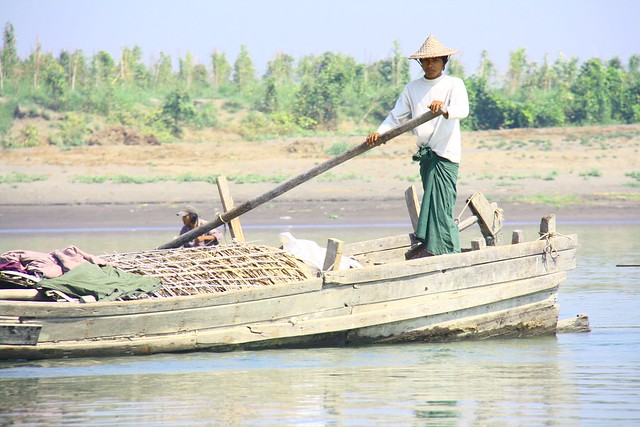
It was the German who first told me about the Chin women with tattooed faces, and about a young guide who could lead us to their villages by traveling up the Lamyo River. The three of us set off in a long wooden boat for a three-hour journey upstream (the Belgian, however, wasn’t interested)..
This region is called the « Chin Hills, » yet their peaks rise over 3,200 meters. The chronicles of the Bagan Kingdom say almost nothing about this area—a sign that it never held much interest for anyone, neither the Burmese kings nor, later, the British colonists, who simply attached it to Arakan and renamed its highest peak « Mount Victoria. »
American missionaries, however, settled there as early as 1890. It wasn’t until 1974 that the region became a modern state, with Hakha as its capital. Until 2016, foreigners wanting to venture there had to obtain a special (expensive) permit and travel under the escort of an official (Burmese) guide.
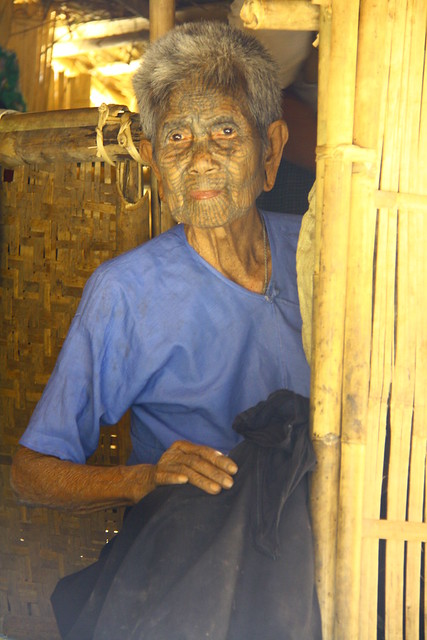
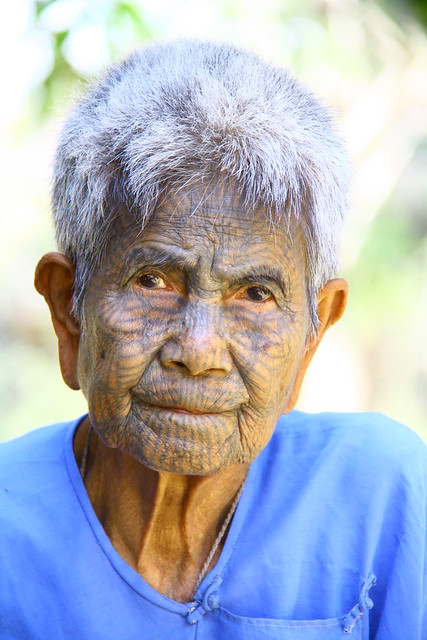
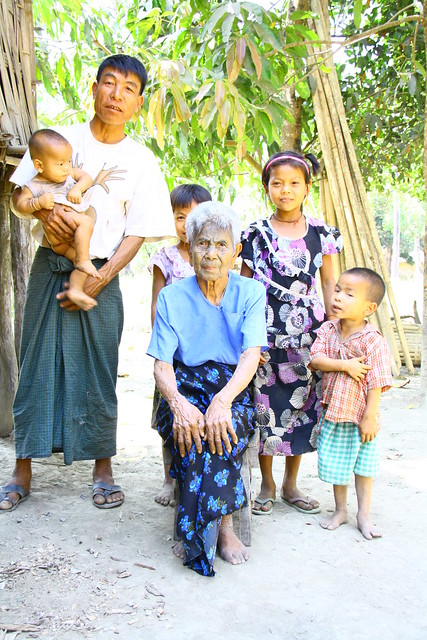
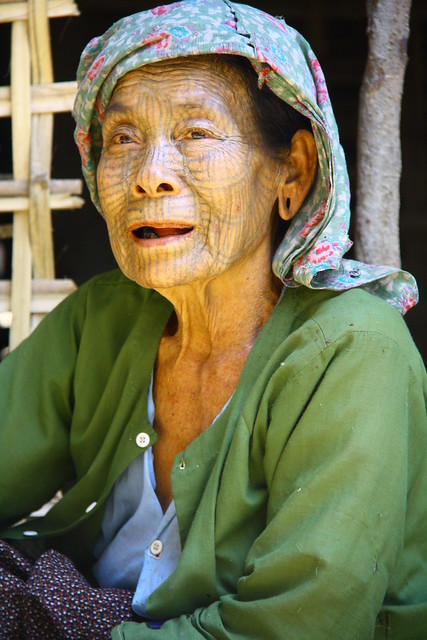
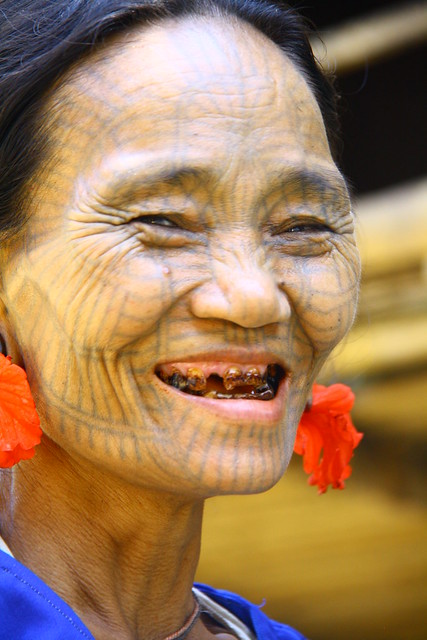
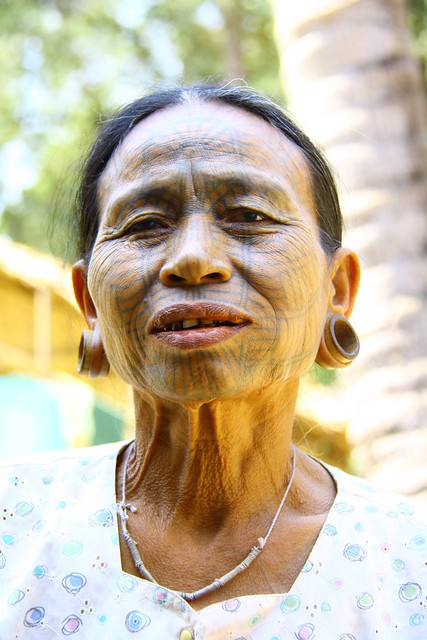
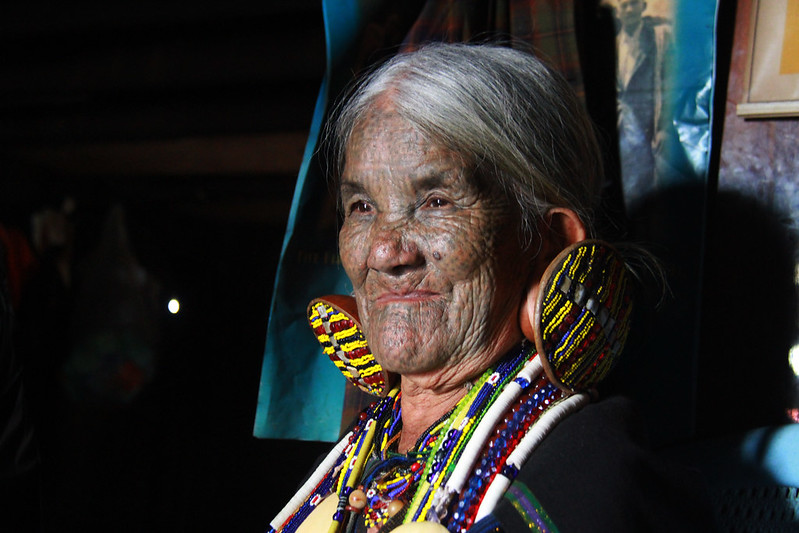
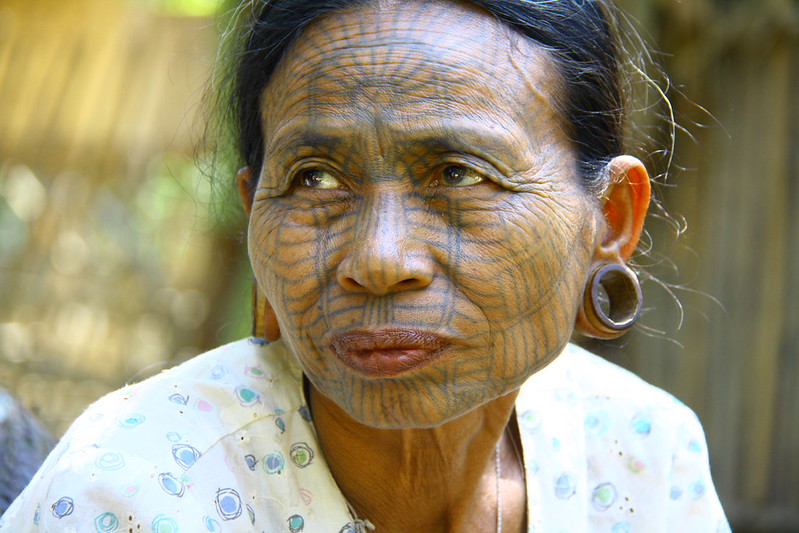
At Kritchung, the first village where our motorized boat docked, children ran to greet us while men worked on the wooden frame of a house, its future walls of woven wicker under a thatched roof. The local guide led me to a hut: Daw Mapruw, born in 1911, allowed her grandson to dress her in a pretty blouse before settling into a chair. The village elder, likely one of the last surviving tattooed women, didn’t say a word, but her gaze said everything. On her face, there were no distinct patterns, only lines, like wrinkles etched in blue ink.
A little further up the river, in Pon Paung,
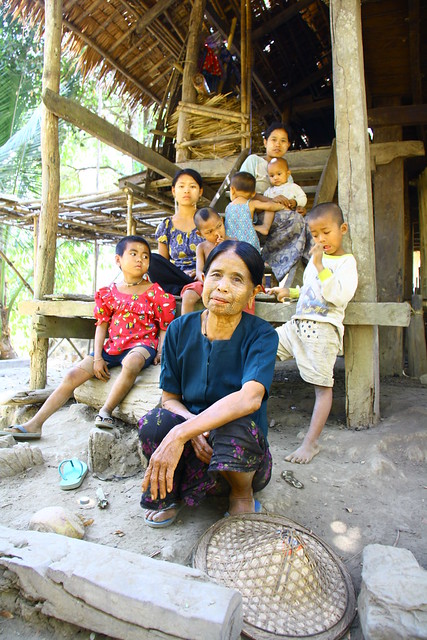
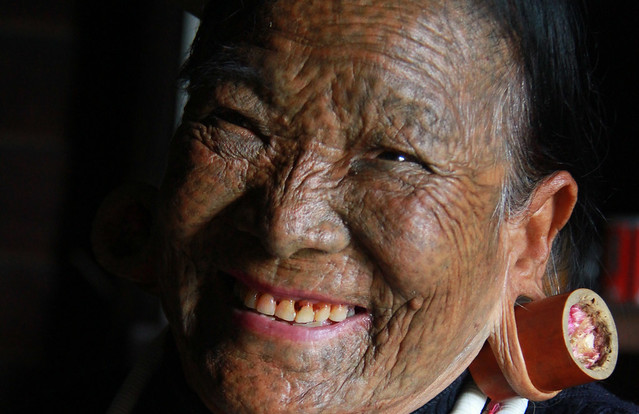
In Pon Paung, ten tattooed women still lived; we met four of them, as the other six had gone to the market that morning and hadn’t returned yet. At first, they laughed at the sight of us arriving, then asked for a moment to fix their hair before the photo, still coquettish at sixty, seventy, or seventy-five years old (though it was impossible to tell exactly). One of them carefully kept a large portrait taken by a photographer who had traveled from afar, a photo that had since circled the globe.
I dared to ask a few questions: they had been tattooed between the ages of seven and eleven. A source of pride? No, they answered bluntly: it had been a suffering—physical at first, then the shock of feeling « disfigured. » Only with time, and the curiosity of visitors from around the world, did they learn to take pride in their tattoos.
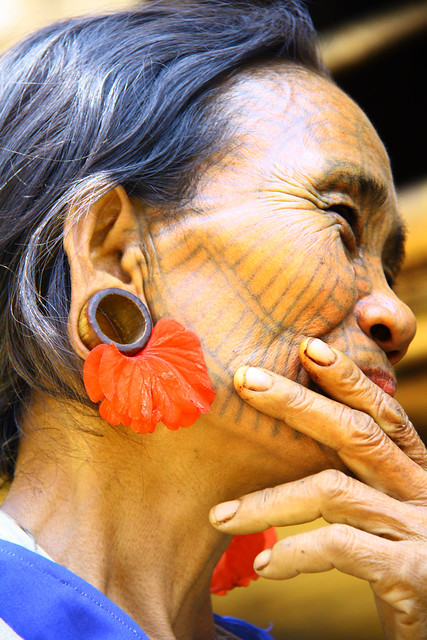
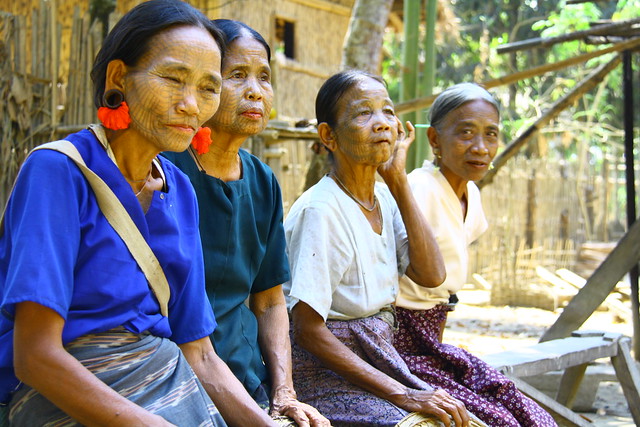
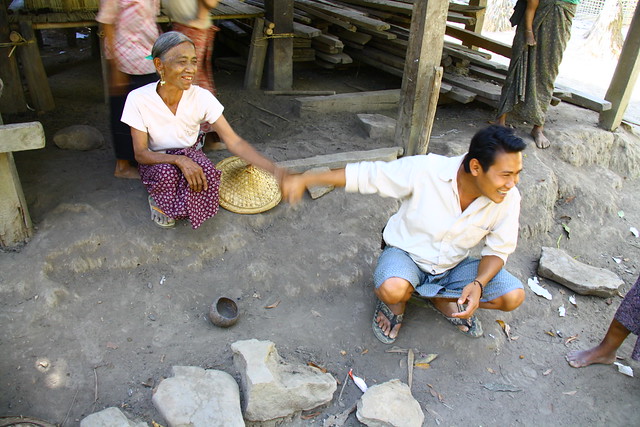
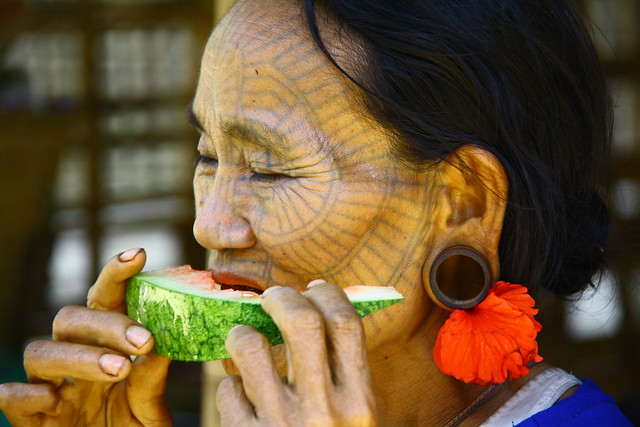
This custom was banned in the 1960s by a law under President Ne Win, so all the tattooed women I met were already over sixty years old. The younger women, who watched us with smiles, confirmed without hesitation that they felt no envy toward their elders—quite the opposite, they were relieved to have escaped the needle. We shared watermelons, watched the Japanese man fail at pounding rice, and one of the grandmothers stood up to show him how it was done.
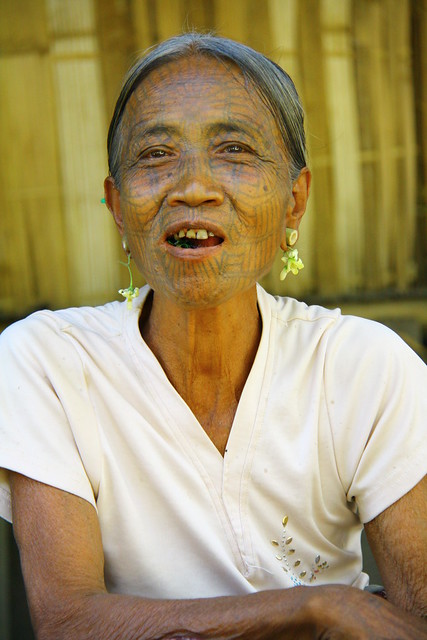
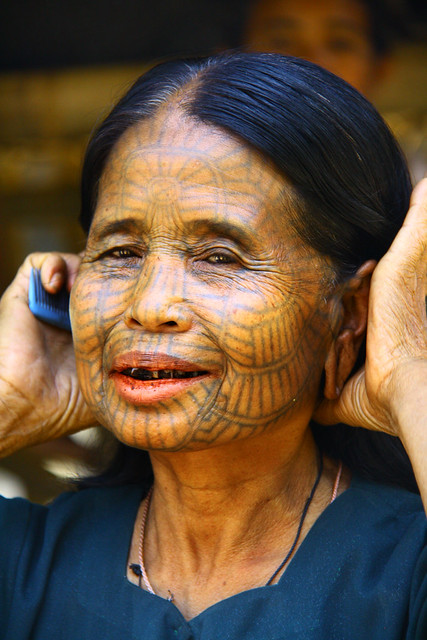
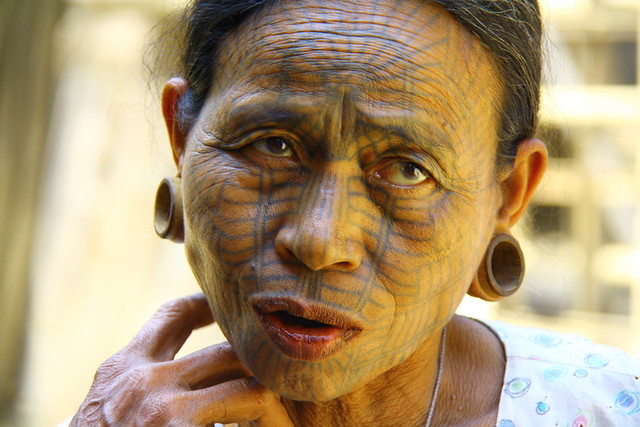
As for the origin of these tattoos, explanations vary and often complement each other. One legend tells of a Burmese king, dazzled by the beauty of a Chin woman, who kidnapped her to make her his wife; to prevent further abductions, villages began to « disfigure » their daughters. Others see the tattoos as a tribal marker, with patterns indicating the wearer’s village of origin, or as an animist symbol meant to ensure the protection of spirits. And not everyone agrees on the idea of « disfigurement »: some, in fact, consider these designs as marks of beauty—possibly a distant ancestor of the thanaka makeup that Burmese women (and some men) still wear on their cheeks today.


Second Story: Mindat, October 2017 – by Road from Pakokku.

I wanted to visit Chin State so badly that I first even considered asking a Burmese agency to secure the permit for me. That would have meant trekking in a 4×4 around Mount Victoria, costing about a hundred dollars a day, including the driver and guide. It wasn’t so much the price that bothered me, but the idea of having to travel in a private vehicle, follow a schedule dictated by a guide, and ultimately miss out on the everyday life of the region. I couldn’t sacrifice my freedom—so I chose to give up rather than compromise it. Then, in 2016, I learned that the state was finally opening to independent travelers. I decided it was time to go on my own terms. Slow to make decisions as I am, it wasn’t until October 2017 that I boarded a bus in Pakokku, surrounded by about fifty Burmese passengers, an Israeli couple, and three Catalans heading for Mount Victoria.
The road flew smoothly across the plain, then began to climb as we hit the first hills: hairpin turns on a gravel path, with the driver constantly maneuvering. At the entrance to Mindat, a military checkpoint recorded the number of foreigners entering the region—there were six of us. The town stretches for several kilometers along a single ridge. We found refuge at Monica’s guesthouse while a persistent rain settled in for the evening.
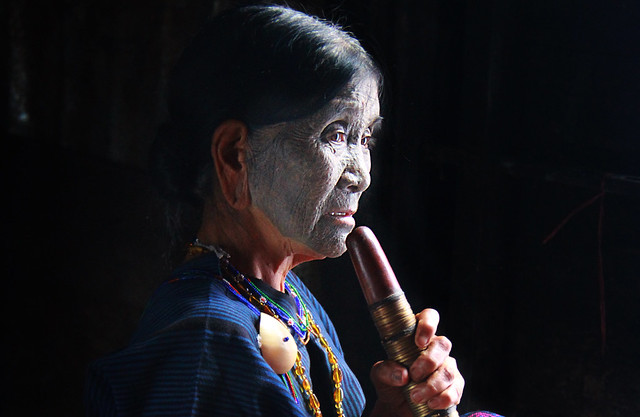
The next day, Monica scribbled an address in Burmese for me—the home of a tattooed woman known for playing the nose flute—and advised me to give her a small donation for the trouble. In the rain, with the Israelis Meir and Galit, I showed the scrap of paper to anyone who would listen, until a passerby finally decided to lead us there himself, striding ahead.
What we found when we entered, barefoot on the creaking wooden floor, was nothing like what I had imagined. Six Westerners armed with oversized lenses were seated in a semicircle. A Burmese guide, wearing an official badge around his neck, directed the scene: a small woman hunched on a stool, a water pipe in her hands, her tattooed face lit by a white reflector disk as she was made to strike the same pose again and again. No words, no exchanged glances, only the clicking of cameras in the room, transformed into a photo studio by the intruders. In a corner, spared from the lenses, two other tattooed women waited. We went to sit near them. Meir took their hands, and they smiled at each other without a single shared word—sometimes, a woman can form a connection faster than any guide ever could.
I could have elbowed my way in to photograph this « witness to a tribal past. » But I was overcome with shame. I felt more like throwing my camera out the window. Instead, I pulled out my phone, switched to selfie mode, and the two tattooed women took turns photographing themselves, laughing all the while.
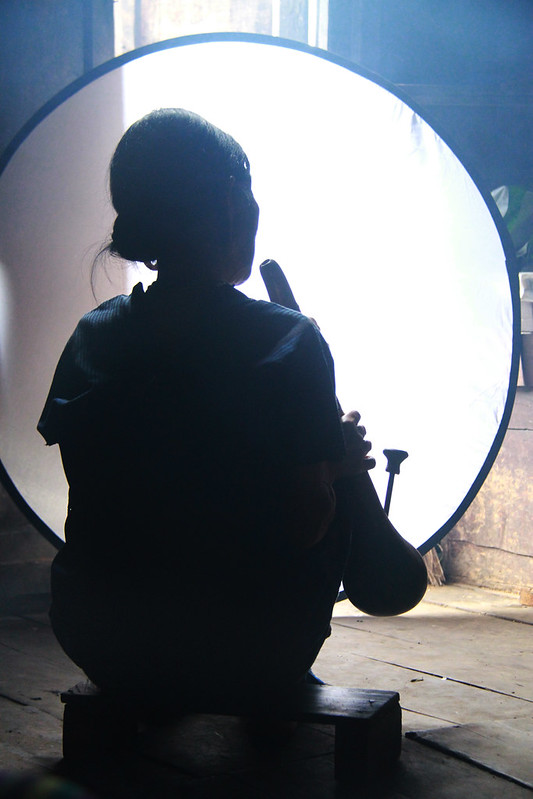
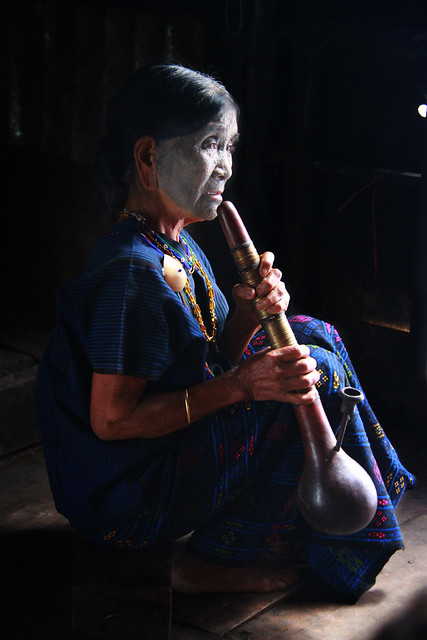
The Burmese can be remarkably strict when it comes to preserving their cultural traditions: shoes must be removed before entering temples, clothing that is too short is forbidden, and some shrines admit foreigners only if they are dressed in traditional costume. Yet at the same time, on that very day, they allowed an official guide to orchestrate the staging of a woman who had been reduced to a mere prop.
When one of the Belgian photographers put his feet up on a chair, pointing them toward her, I couldn’t keep quiet. With all the solemn earnestness of Brainy Smurf, I explained that you should never point your legs toward your host. A sigh, his feet reluctantly lowered, and a contemptuous glance from his wife, who asked, « Who’s that guy ? »
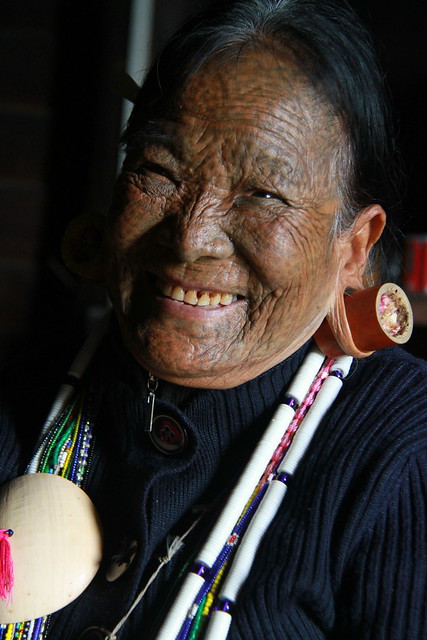
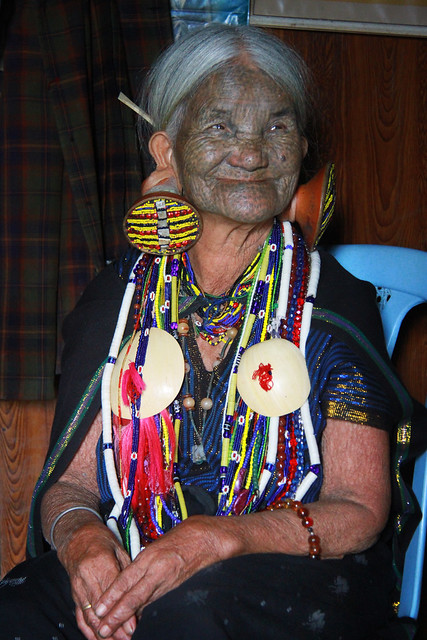
When the group finally dispersed, the « model » retreated to another room to put on a sweater—she had been cold from the very beginning, she had said so, but to no avail. Left alone with us, the other two women showed us the nose flute they play, a distinctly Chin instrument that, apparently, can only be played with the nose.
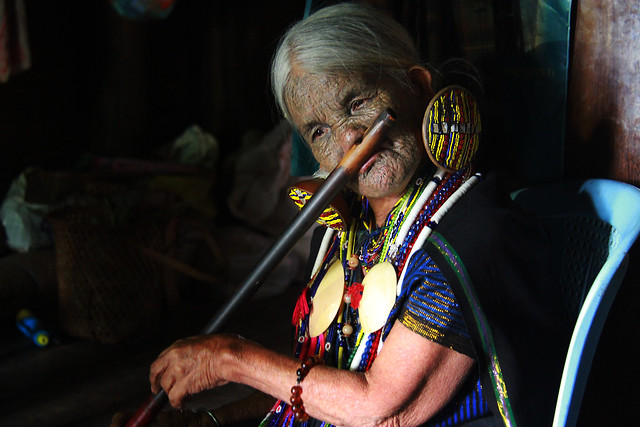
Elsewhere in Mindat, other tattooed women we encountered in the narrow streets reacted according to their mood: some asked us to keep our distance, while others invited us to come closer.
Mindat rarely sees Westerners linger for more than a day. Yes, there are groups, like the photographers traveling under the escort of a Burmese guide, his official tag around his neck granting him the authority to issue orders to the local people, but few outsiders spend more than a fleeting moment in this hilltop Chin town. Our presence was unusual, and as we cast curious glances at everything around us, the reactions varied: some were wary, others eager to help. Few spoke English, so sometimes a young nephew studying « exotic languages » would be summoned, or an elderly grandfather, educated in the colonizer’s’ tongue, who had spent a lifetime listening to nothing but the BBC on a transistor radio that had defied time.
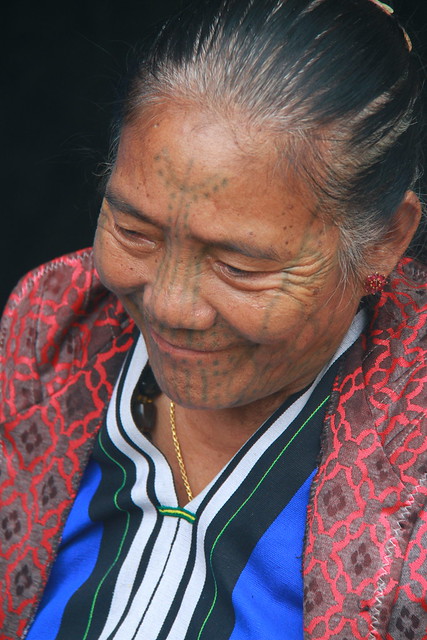

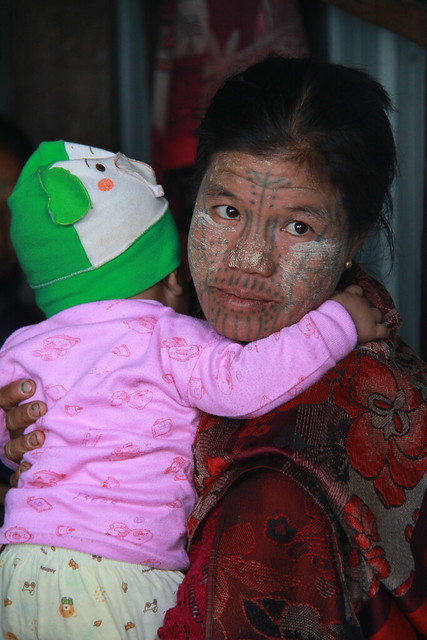
One of the tattooed women we saw wandering near the vegetable shops was only in her thirties. I was told she had chosen, of her own accord, to have her face tattooed, even though the practice had already been outlawed. I noticed that the design on her face was the same as the one worn by the other women in town.
As we made our way back down the trails, a teacher from a Christian school entrusted us to two students, who guided us to Robert’s home. His grandfather, a shaman, had converted to Catholicism, as had about three quarters of the Chin today, with shamanic medicine having given way to the missionaries’ clinics. Robert had assembled what was perhaps the finest collection of traditional objects in the region, but he disliked writing and avoided modern technology. Even so, he gave me the contact details of Joseph, who was then preparing a book on Chin culture. I wrote to Joseph, but I never received a reply.
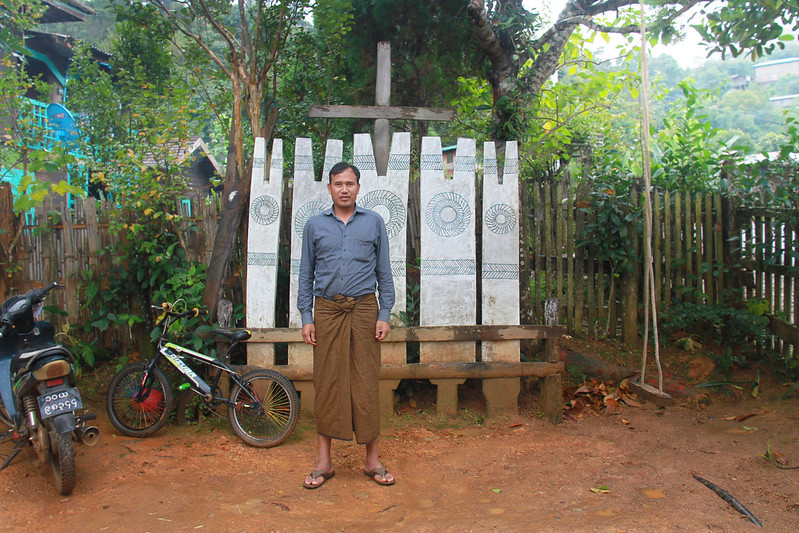
A few days later, on my way out of Mindat, the same official noted in his roadside hut that six foreigners were leaving the town. The rain had never stopped, the Catalans had given up on Mount Victoria, and I knew I would come back.
What Remains
Today, the tattoo pattern on a Chin woman’s face no longer speaks only of the legend of a foreign king or of animist protection: above all, it identifies the village she comes from. All the tattooed women I met in Mindat, with the exception of the three oldest, shared the same design. Although the practice has been banned since the 1960s, it has not entirely disappeared, I met a young woman in Mindat who was said to have defied the law, and she is reportedly not the only one. Between the Lamyo River and the ridges of Mindat, six years apart, I witnessed two very different faces of the same story: one of a peaceful encounter, shared on a riverbank; the other of a staged performance that turns the living memory of a people into a studio prop. Both, in their own way, tell of the price of becoming, in the eyes of the rest of the world, a curiosity.
Fifteen years have passed since my first visit, and I still remember those days spent immersed in Chin culture among the most beautiful of my life. I remember perfectly the emotion I felt and the warmth these women radiated.
Photos, texts and memories © Frédéric Alix, March 2011 (Lamyo River) and October 2017 (Mindat).



Votre commentaire